
Chairside 01
Esthetic Decision-Making in the Presence of a Diastema
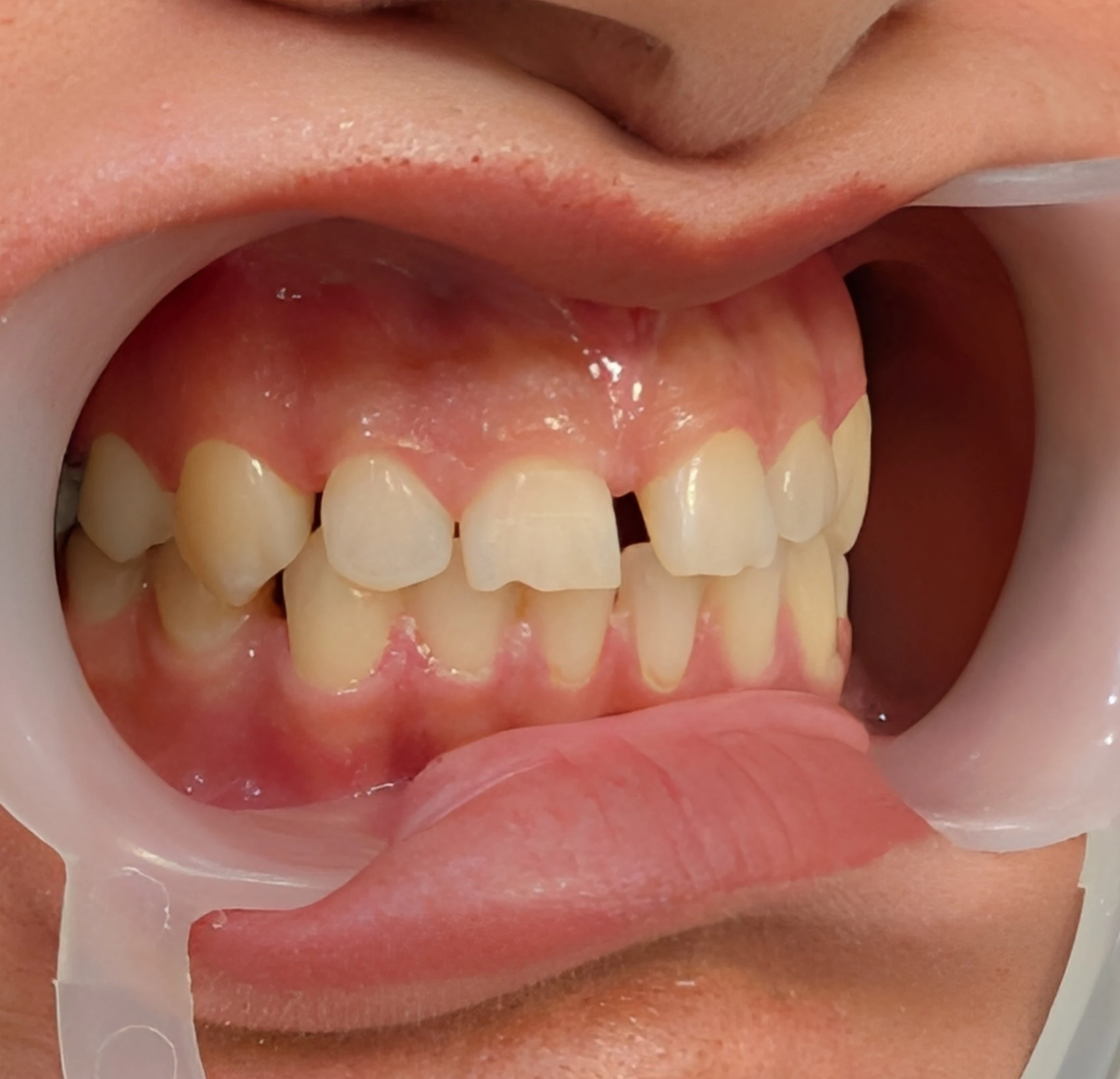
The patient presented with an esthetic complaint. On examination, there was a diastema in the midline region between the central incisors. In addition, space was also seen in the distal region of the centrals. The width of the teeth was within the normal range.
In evaluating the esthetic treatment plan, closing the diastema directly with a laminate veneer would increase the width of the centrals. In this situation, because the patient is accustomed to the normal dimensions of her teeth, widening the teeth might not be acceptable to her psychologically and esthetically.
To prevent widening of the centrals, reduction had to be performed from the distal region of the central. But in this case, the space created would inevitably be transferred to the lateral tooth and would increase the width of tooth 2. To prevent this increase in width, reduction from the distal of tooth 2 and transfer of the space to the next tooth would again be required.
Overall, direct esthetic treatment in this situation would either lead to excessively wide teeth, or would require chain-like, non-conservative reduction from the distal surfaces of the anterior teeth.
On this basis, it was decided that the patient should first be referred for orthodontic treatment so that the spaces are distributed in a principled and proportionate manner. After correcting the position of the teeth, it will be possible to perform a mock-up and evaluate the final esthetic result before entering the prosthetic treatment phase and imposing costs on the patient.
The content of this page is intended for the educational use of dentists and dental students.