
Chairside 10
Deep Placement of an Implant in a Fresh Socket — A Problem That Reveals Itself at the Prosthetic Stage
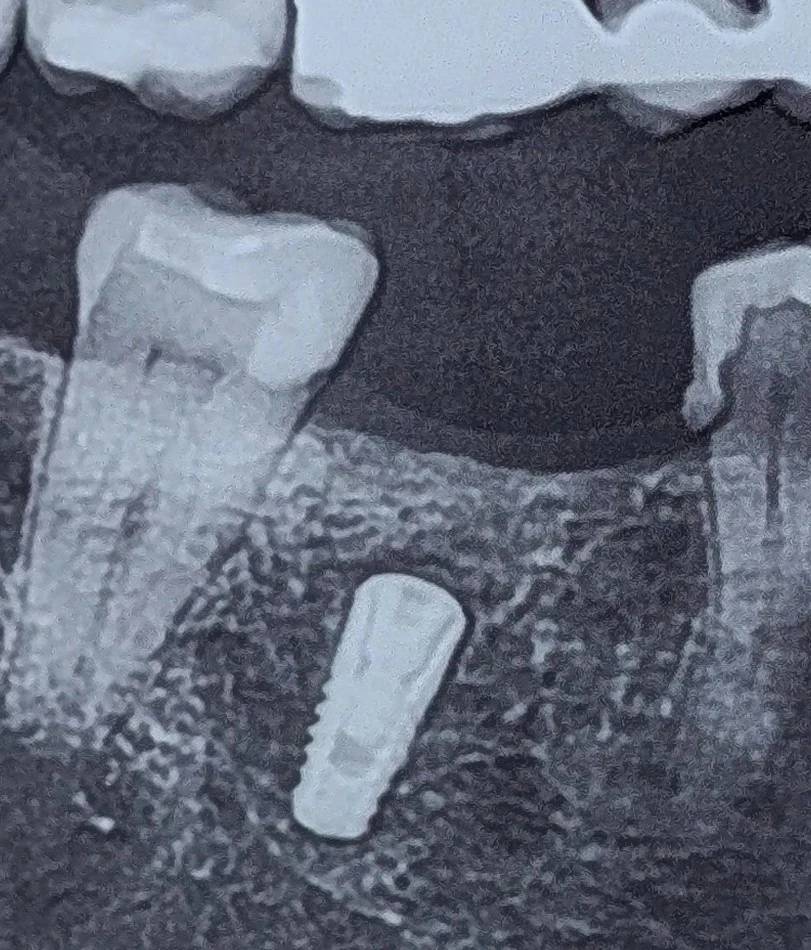
-
The patient had presented for a post-fixture-surgery visit and to review the continuation of implant prosthetic treatment.
The implant had been placed in the socket of the extracted tooth, as a fresh socket placement.
-
Integration had occurred and at first glance the situation seemed acceptable.
But its position — a few millimeters below the bone level — was the detail that changed the treatment path.
-
Here the main question arises:
Is placement of the implant in bone, by itself, sufficient to enter the prosthetic phase?
-
In this case, the excessive depth of the implant had placed the platform in a very apical position;
and this very fact creates numerous challenges in the prosthetic phase.
-
In terms of access, this position makes the basic prosthetic steps considerably more difficult.
Placing, removing, and tightening the impression coping or scan body at such a depth comes with limited visibility and access.
This can affect the accuracy of recording the implant position and ultimately lead to misfit of the prosthesis.
-
On the other hand, the great depth of the platform places the prosthetic margin in a deep and inaccessible position.
In cement-retained restorations, this situation makes control and complete removal of the cement difficult and can increase the risk of peri-implant complications.
-
In screw-retained restorations as well, this position may limit the path and angle of access to the screw and reduce the prosthetic options.
-
Biomechanically, too, the increased vertical distance between the platform and the occlusal surface can create conditions in which greater stress is applied to the prosthetic components
and, in the long term, increase the risk of screw loosening or component failure.
-
The important point is that in many cases this position is not the result of a conscious decision;
rather, it results from the implant being unconsciously guided into the empty space of the socket — where past anatomy replaces future prosthetic planning.
-
In this case, given the totality of these considerations, entering the prosthetic phase for this implant was not accepted.
This decision was made not because of surgical failure, but because of the mismatch between the implant position and the prosthetic requirements.
-
This experience is a reminder:
Correct implant placement does not simply mean being positioned in bone;
rather, it means being positioned where it can support a predictable, maintainable, and biomechanically stable prosthesis.
Sometimes the problem is not in what is seen;
it is in what will reveal itself at the prosthetic stage.
The content of this page is intended for the educational use of dentists and dental students.