
Chairside 03
Implant and a Long-Standing Mandibular Molar Loss?
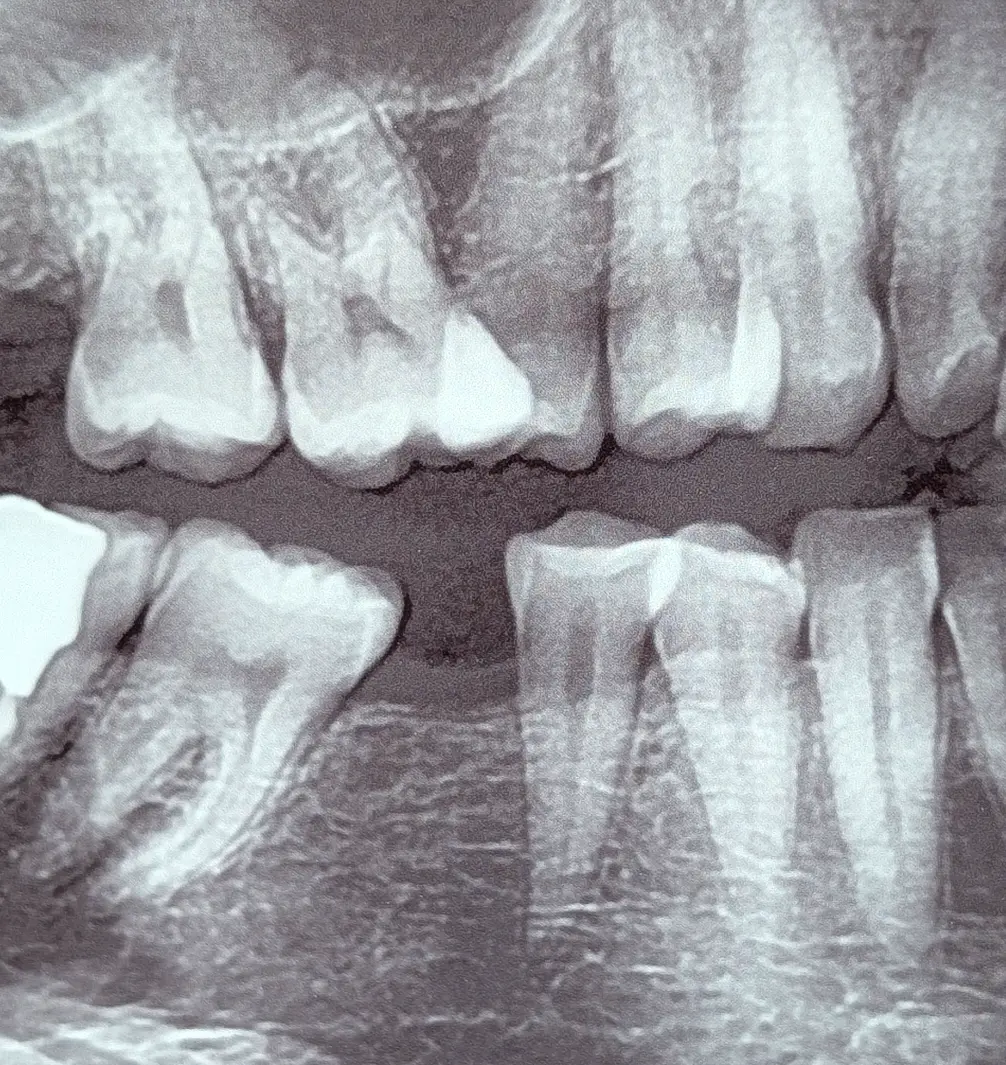
The patient presented for replacement of a missing tooth. He said he had lost this tooth in childhood and was now thinking of replacing it.
The initial questions were simple: Do you have an esthetic problem? No. Do you have any difficulty chewing food? No.
On examination, a long-standing edentulous space was seen in the mandibular molar region. Supraeruption of the opposing tooth was very mild, and the surrounding teeth had only minor changes; to the extent that they had created no significant effect on occlusion, function, or food impaction.
This case, more than being a «problem», was a long-standing, stabilized situation; something that, had it been going to get out of control, would usually have shown itself years earlier.
Replacing the tooth was not a simple path. Given the condition of the bone, the possibility of needing a graft was raised. And despite the mild tilting of the posterior tooth, if we wanted to enter the reconstruction without correction, the risk of food impaction and challenging prosthetic designs would rise.
In a situation where the patient has neither a functional problem nor an esthetic complaint, entering this path does not necessarily mean an improvement in quality of life.
It was explained to the patient that over these years the changes had been very limited and this tooth loss had not had a notable effect on his masticatory system; so at present, not intervening may be the most logical choice.
Chairside, treatment is sometimes not summed up in «adding something»; rather, it lies in preserving a stability that has not yet been disrupted.
The content of this page is intended for the educational use of dentists and dental students.