
Chairside 04
When Cervical Resorption Does Not Mean the End of the Tooth
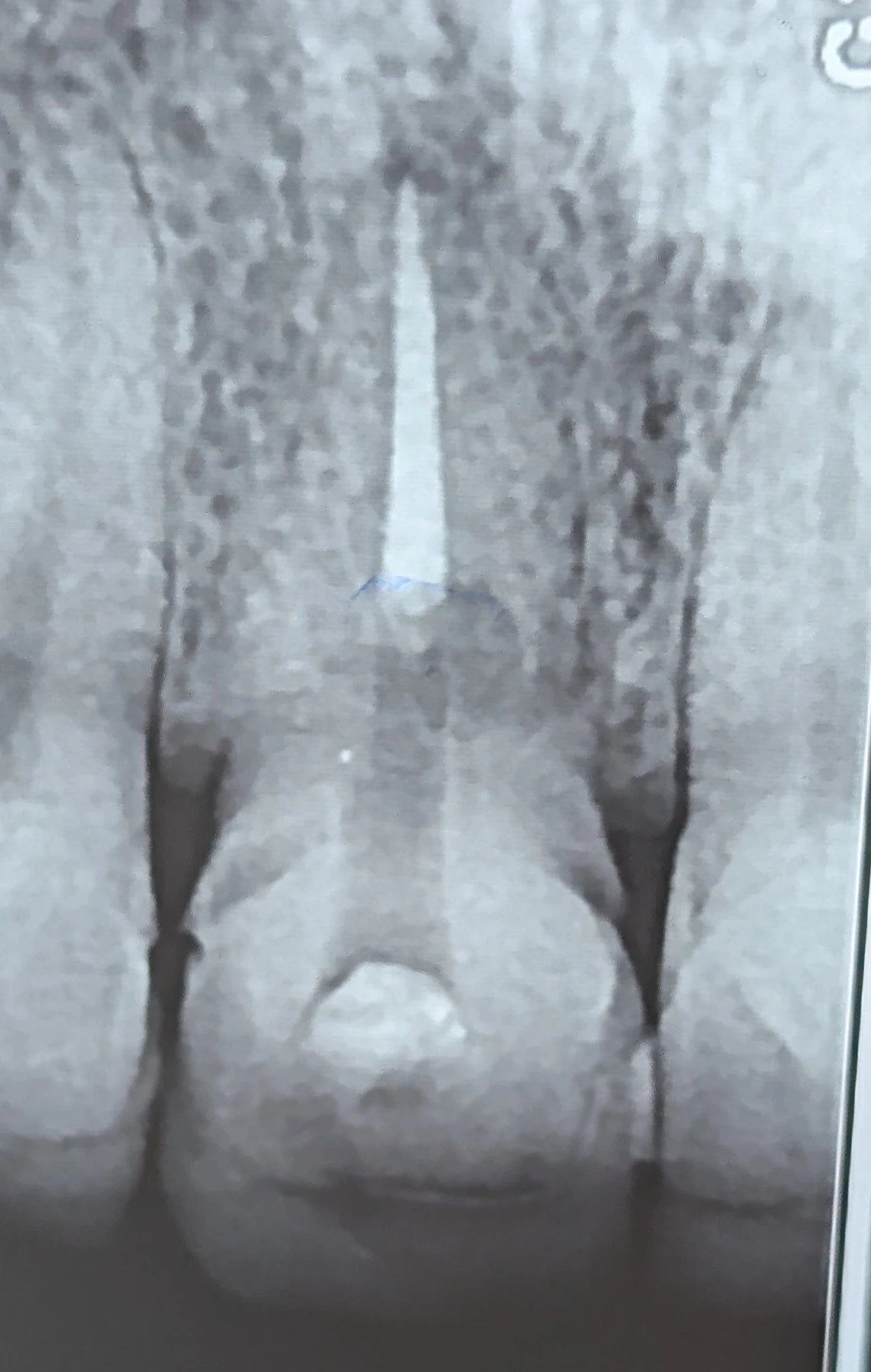
The patient had come for evaluation of an anterior tooth; the previous decision was clear: extraction of the tooth and replacement with an implant.
But for the patient, losing this tooth was not just a treatment procedure; it was an important esthetic and emotional issue.
On radiographic examination, a lesion was seen in the cervical region that was consistent with the pattern of External Cervical Resorption (ECR). The lesion had progressed toward the pulp and had weakened the root structure.
In advanced stages, this condition often leads to extraction of the tooth; but if complete removal of the resorptive tissue and creation of an adequate seal are feasible, preserving the tooth can still be considered.
Instead of an immediate decision for extraction, the option of preserving the tooth was raised and the patient was referred for a second opinion.
The proposed treatment plan included:
- Complete filling of the canal with MTA, because of the weakness of the wall and the possibility of communication with the pulp
- Surgical access and removal of the resorptive tissue from the outside (debridement)
- A 6-month follow-up to assess arrest of the resorption process
In advanced cervical resorption, removal of the active resorptive tissue is the condition for arresting the disease, and MTA can create a reliable biological seal and help with hard-tissue repair.
Implant therapy is predictable; but when possible, preserving the natural tooth still has high biological and psychological value.
Sometimes, chairside, the right decision is not in replacement, but in giving an informed chance to preserve the tooth.
The content of this page is intended for the educational use of dentists and dental students.