
Chairside 53
Why does a gap develop between crowns that used to be in contact?
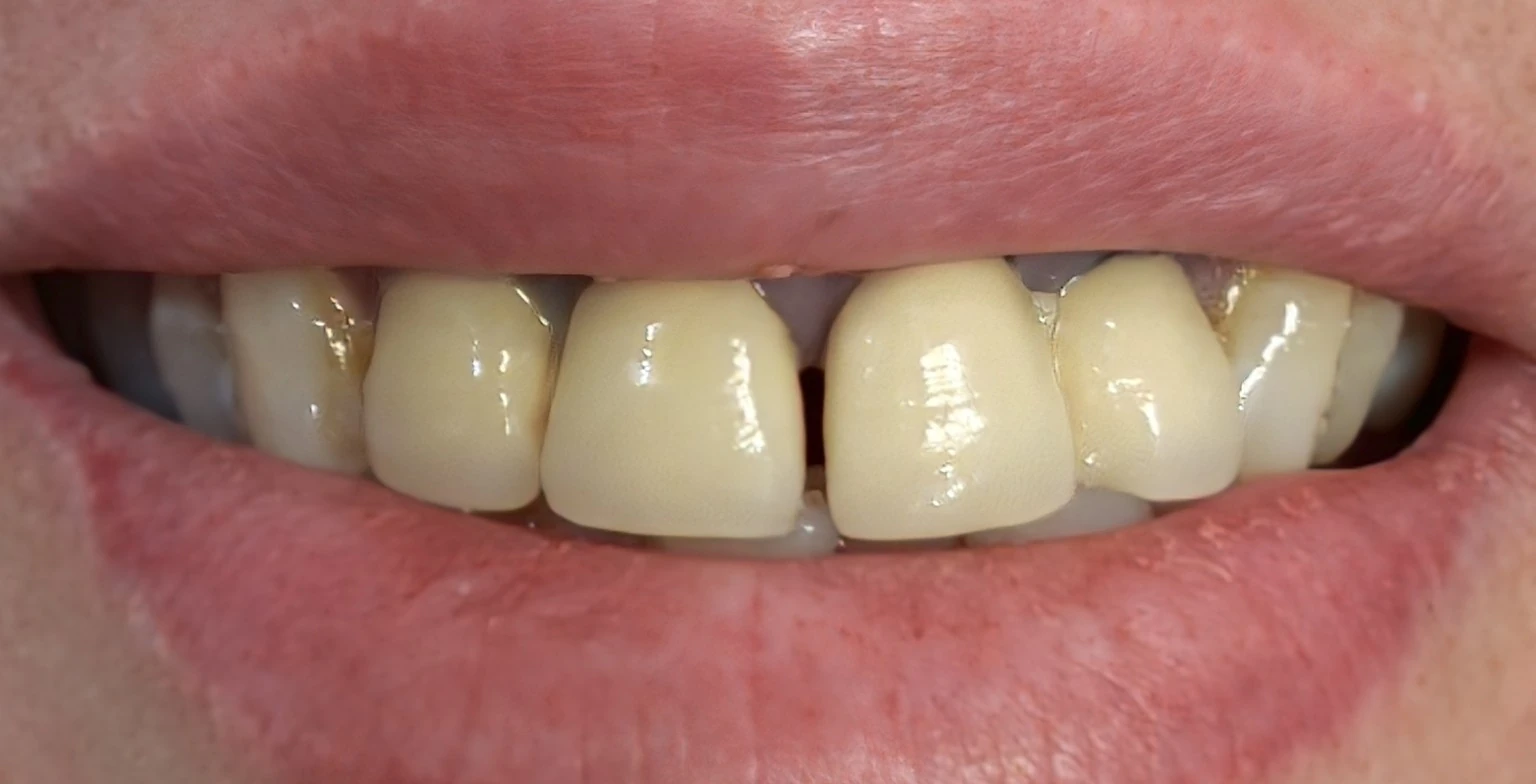
A patient came in whose maxillary anterior teeth had been crowned several years earlier. The crowns were splinted together in several groups. What caught my attention was the gap between the two central incisors.
The patient said that there had been no gaps between the teeth when the crowns were delivered, and that this diastema had developed gradually.
One of the first possibilities we should consider in these circumstances is pathologic tooth migration.
Teeth do not occupy a permanently fixed position; their position reflects a balance between occlusal forces, the tongue, the lips and support from the periodontal tissues. When this balance is disturbed, the teeth may gradually move.
For example, if the patient has experienced bone loss and reduced periodontal support, the anterior teeth may move under forces they previously tolerated. Loss of posterior stops or changes in occlusal contacts may also alter force distribution in some patients. Together, these factors may lead to flaring of the anterior teeth and the development of a diastema.
What is interesting is that even splinting the crowns does not necessarily prevent this from happening. The teeth within a splinted group may move together, gradually creating a gap between two groups.
Of course, this clinical view alone cannot establish the cause. Before making any treatment decision, the periodontal condition, bone support, posterior and anterior occlusal contacts, and the integrity of the crowns themselves need to be assessed.
The point I want to emphasize is that when a gap gradually develops between two old crowns, we should not simply think about closing the gap or replacing the crowns. First, we need to understand what has caused the teeth to change position.
This page is intended for educational use by dentists and dental students.