
Chairside 56
Before Removing an Old Bridge, Why Should We First Check Whether It Can Be Replaced?
∆ 1. Case history
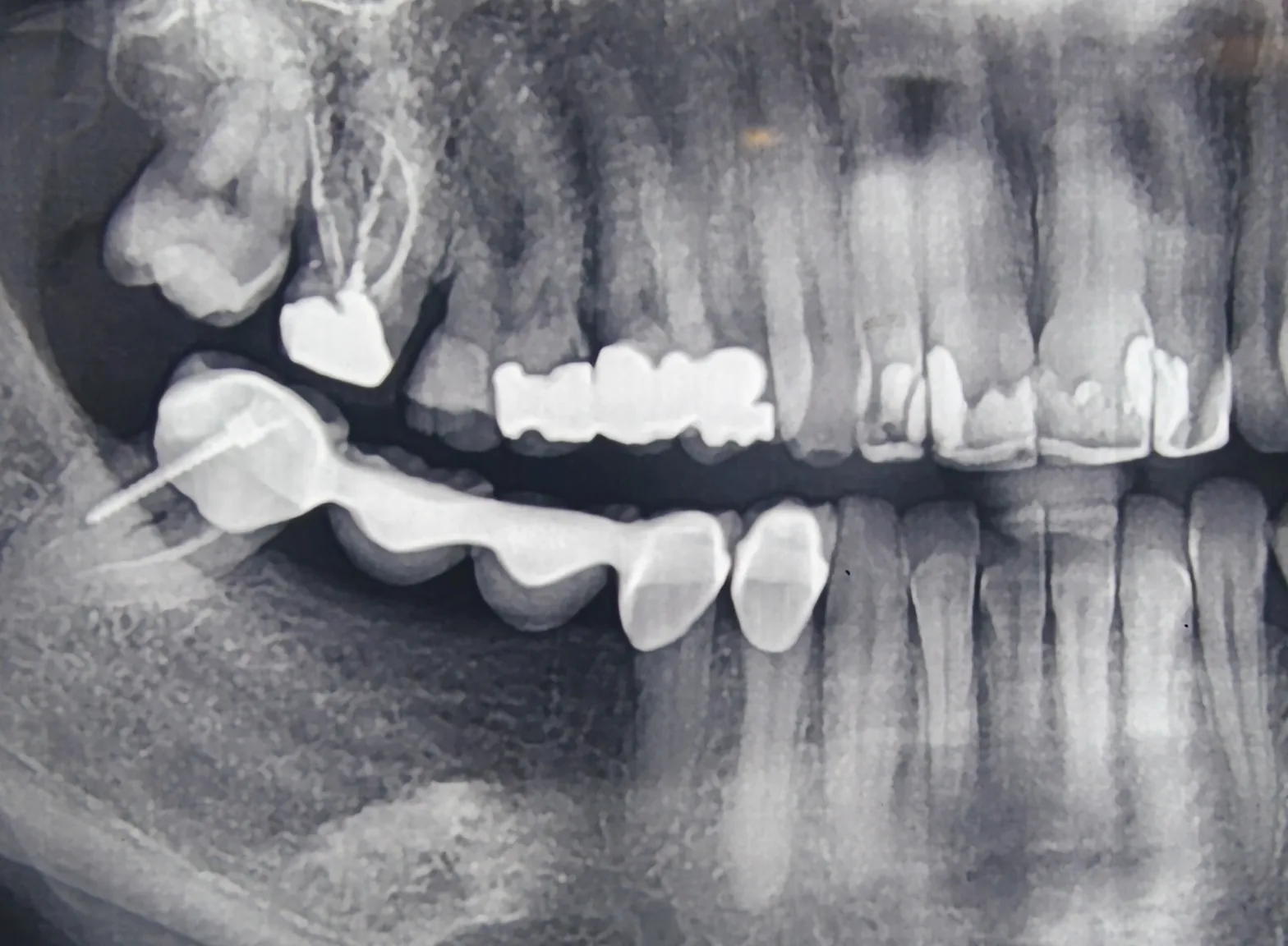
A patient with a long history of wearing an old bridge in the right posterior mandible (teeth 5 to 8) presented for consultation regarding implant treatment.
∆ 2. The old bridge and its longevity
On examination, I explained to the patient that this bridge, in its design and in its treatment principles, is not a design I would choose or carry out for the patient. On the other hand, a bridge that has remained in place for a long time is not necessarily functioning well. One possible reason this bridge has survived may be that it has no effective contact with the opposing teeth and therefore carries no meaningful occlusal load.
∆ 3. The order of treatment
But the more important point was the order in which treatment is carried out.
I explained to the patient that if we remove the bridge first and then refer for implant surgery, later assessments may show that, for one reason or another, implant surgery is not possible in this area. In that situation we may no longer be able to replace the previous bridge under the same conditions, and the patient would face a situation they never intended to enter.
∆ 4. The proposed approach
I therefore suggested that, before any irreversible step, the patient first consult the periodontist so that the feasibility of implant surgery in this area is assessed and confirmed. Once the specialist has confirmed that surgery is possible and the patient, understanding the situation and accepting surgical treatment, has made their decision, we can proceed with removing the bridge and continuing treatment with greater confidence.
Bottom line
Sometimes the most important treatment decision is not which treatment to choose, but the correct order in which the steps of treatment are carried out.
This page is intended for educational use by dentists and dental students.