
Insight 16 — Biological Care in Splinted Implants
A brief clinical explanation
Difficult hygiene = easy inflammation
One of the most common problems with implants is biological issues; where inflammation and peri-implantitis begin not from a technical defect, but from the impossibility of maintaining hygiene.
In implants whose crowns are designed as a splint, the embrasure space becomes more closed, and the patient effectively cannot pass floss, superfloss, or a water jet along the correct path.
The result? Plaque remains, inflammation begins, and a healthy case moves toward peri-implantitis.
An important clinical point
Before delivering the final work, we must provide the biological provisions for the patient from this very point. One of the most important of these:
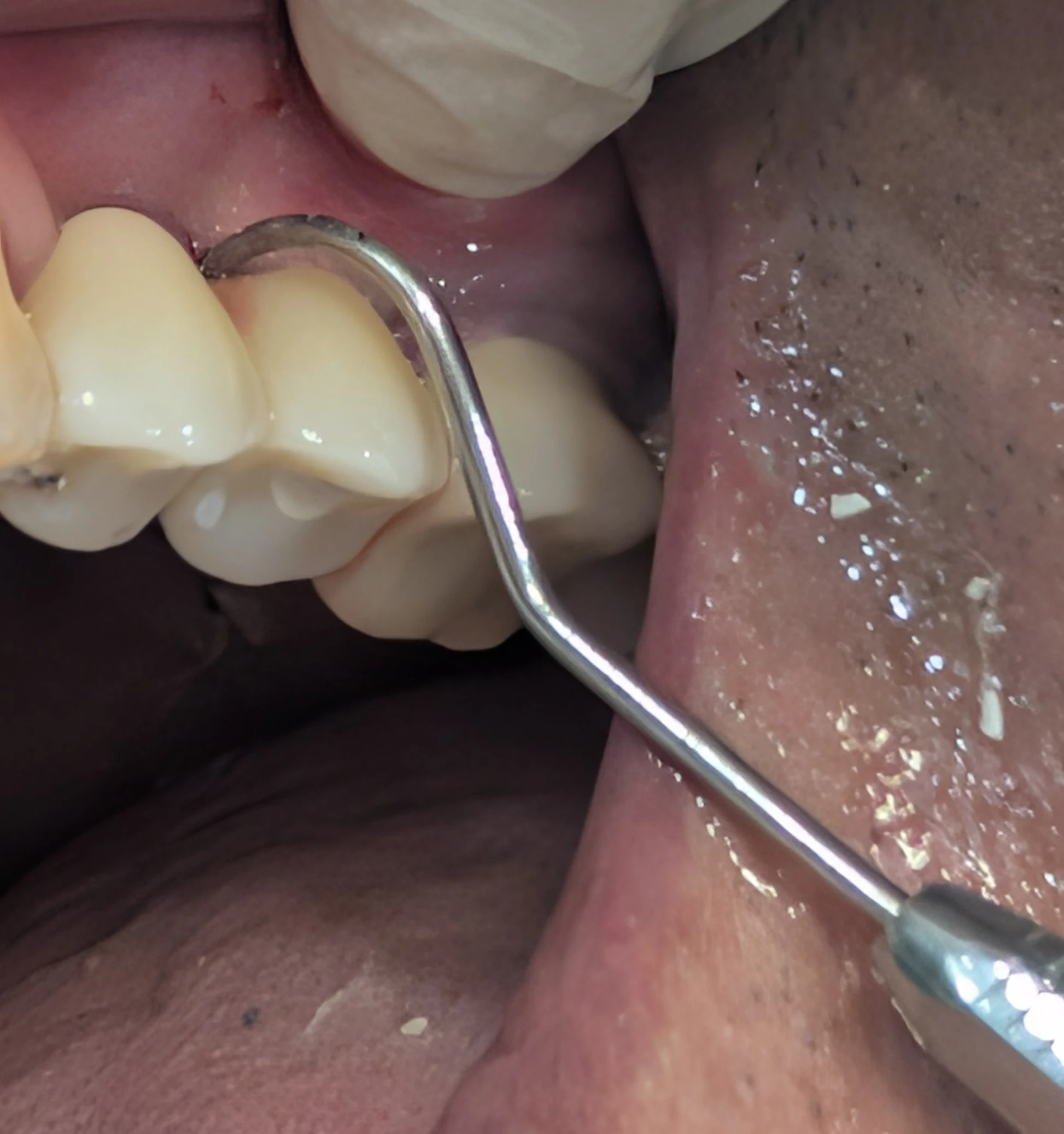
Passing an explorer through the splint embrasure before delivery
When implant crowns are splinted together, we must pass an explorer through the embrasure between them to make sure that a real, usable path exists for the patient.
This has one big benefit:
- Ensuring the patient's access to use superfloss or a water jet;
- in order to prevent inflammation and biological damage in the long term.
If the explorer does not pass through ← it means there is no hygiene path ← it means the contour, embrasure, or contacts must be corrected.
Conclusion
Implants run into trouble more than anything else from inadequate hygiene. Our job is not limited to advice; we must create conditions in which maintaining hygiene is possible, easy, and repeatable.
Passing an explorer through the splint embrasure before delivery is a simple, vital test that determines the biological fate of the implant.
The content of this page is intended for the educational use of dentists and dental students.