
Insight 26 — Correct Transfer of Scan Body Information; One of the Pillars of Implant Prosthetic Success
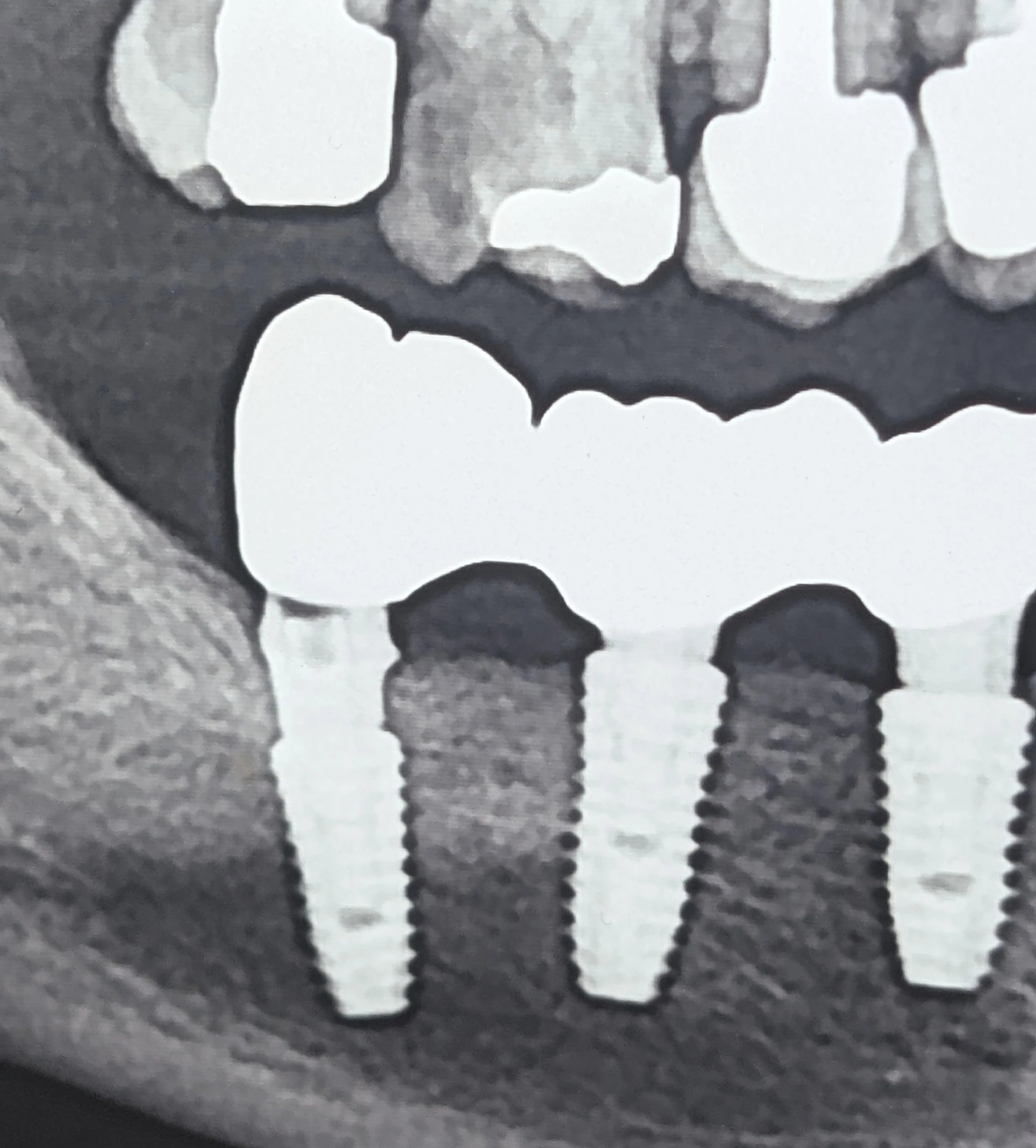
Clinical explanation
In digital implant prosthetics, accurate transfer of Scan Body information and correct selection of the library file are among the pillars of correct and successful treatment; whether in single-unit or multi-unit restorations.
In one visit, the patient presented with a failure in the joint area between units 6 and 7. Review of the images taken before the failure showed that the crown of unit 7 had not fully seated on the abutment.
Based on the information obtained from the patient, it became clear that a digital scan had previously been performed and the crowns had been designed and fabricated digitally.
Key digital point
When the final fit becomes problematic, two basic errors must be seriously examined:
incorrect transfer of the Scan Body geometry to the design software
selection of the wrong library file in the laboratory
The consequence of these errors can be that the design system effectively works with a wrong reference; for example, matching with a short Scan Body instead of the tall type and, as a result, fabricating an abutment with disproportionate height or geometry.
Why can it stay hidden in splints?
In splinted restorations, the incomplete seating of one unit can sometimes be less obvious at the cementation stage; because the structure distributes force and contacts as a single integrated piece and the error of one unit may, at first glance, be «masked».
Biomechanical consequence
If the crown effectively lacks effective support from the abutment side, stress concentration in the connector area increases and fracture from the joint area can occur.
️ Corrective approach
In this situation, the path to correction, instead of scattered guesses, must return to the reference point:
re-scanning with the correct Scan Body
checking the fit with the correct library file
and rebuilding the prosthesis based on the corrected data
Clinical summary
A Scan Body is not just «a scanning tool»; it is the geometric reference for the design.
Any error in data transfer or in selecting the reference file can turn the treatment path from a reliable fit into a structure with hidden stress and late fracture.
The content of this page is intended for the educational use of dentists and dental students.