
Insight 29 — A Cementation Approach for Managing the Contact Between the Crowns of Teeth 6 and 7
Published:
Last reviewed:
فارسی
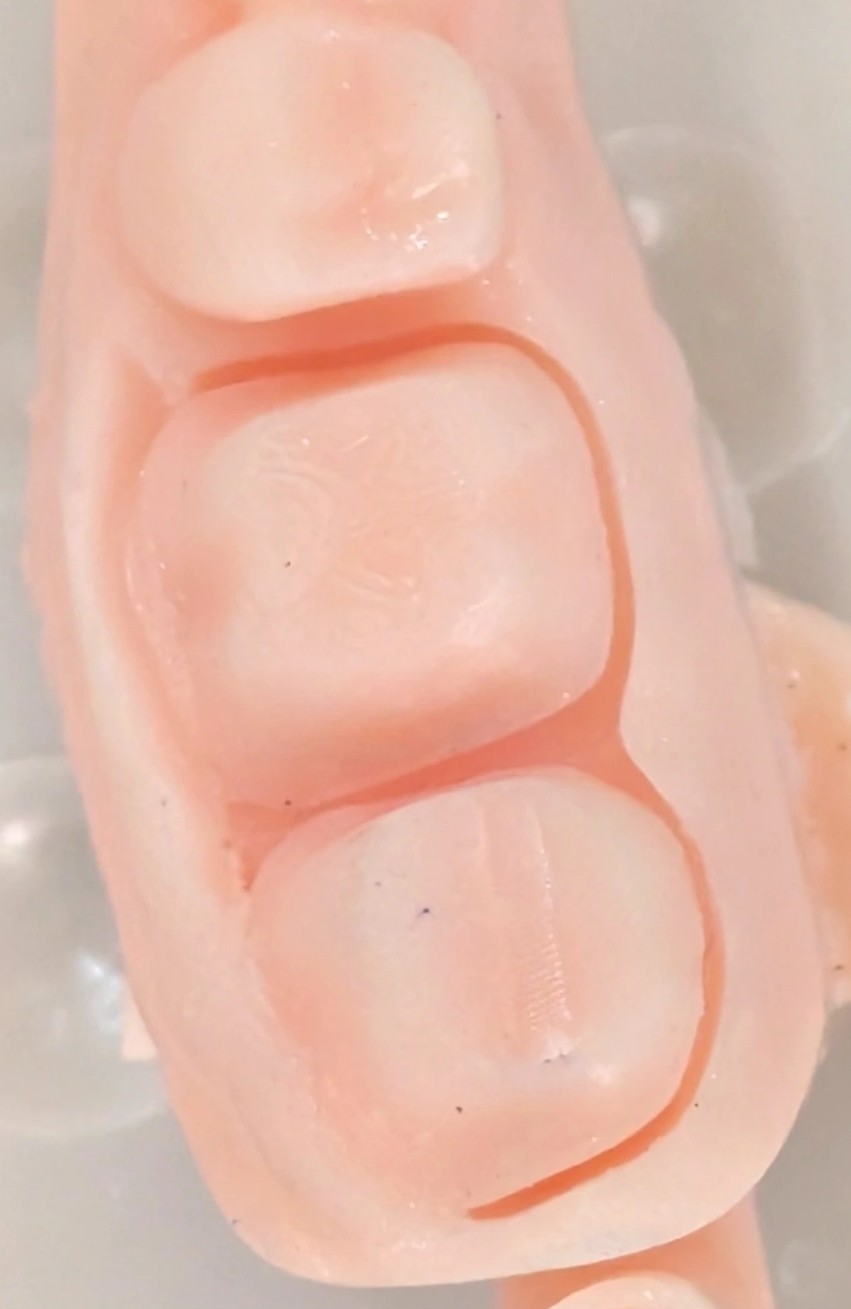
Clinical explanation
-
In restoring the tooth 7 area with a crown, maintaining an appropriate contact is of particular importance.
- Depending on the applied forces and the occlusion, there is sometimes a possibility that the contact between the crown of tooth 7 and tooth 6 opens up
- We discussed this issue in detail in one of the middle episodes of DentCast, which you can find by searching the word «contact» in the site's search section.
- Now, sometimes the crowns of 6 and 7 are made at the same time
- In this method, cementation is performed in stages. First, the crown of tooth 7 is delivered with permanent cement and the crown of tooth 6 with temporary cement, and the situation is evaluated for a period — for example, one month.
If no opening of the contact occurs during the trial period, the crown of tooth 6 is cemented permanently.
But if a problem arises, the crown of tooth 6 is adjusted to ensure that there is no problem or opening of the contact.
The reason for choosing this method is based on the structural features of the teeth. The crown of tooth 7 is usually shorter in length than the crown of tooth 6, and if used with temporary cement the likelihood of it debonding and falling out is greater; moreover, by keeping the cement of crown 6 temporary, we have control over both contacts, and in this way there is no need for both crowns to be temporarily cemented
This approach aims to optimize and facilitate the patient's treatment and to control future problems more effectively
For better management of the possible complications, the following cementation method is suggested:
The content of this page is intended for the educational use of dentists and dental students.