
Insight 33 — Purposeful Expansion of the Scan to Achieve a Better Form
Published:
Last reviewed:
فارسی
Clinical explanation
- In intraoral scanning we usually try to keep the scan range as limited as possible; because as the scan area gets larger, stitching errors increase and the final accuracy of the scan may decrease.
- However, in some cases this principle can be set aside deliberately.
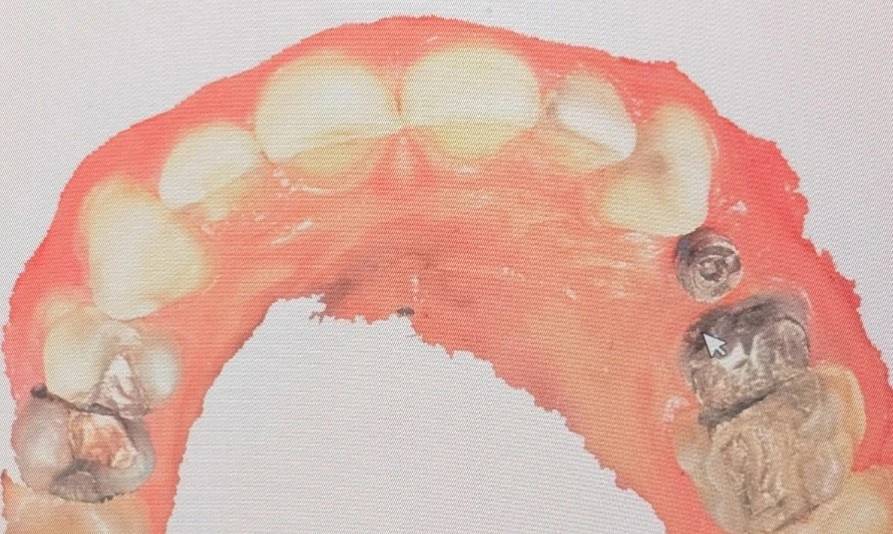
- In this patient, the area was the implant of the maxillary first premolar, but the adjacent tooth — the second premolar — did not have a proper form and could not be a reliable reference for designing the crown.
- For this reason, I deliberately expanded the scan range so that the first premolar of the opposite side would also be included in the scan.
- The goal was for the laboratory technician to have a healthy anatomical reference and to design the crown form based on it, rather than based on a tooth that itself does not have a correct form.
- In fact, here a small amount of reduction in the numerical accuracy of the scan was accepted so that, in return, a more beautiful and more acceptable final form could be achieved in the crown design.
The content of this page is intended for the educational use of dentists and dental students.