
Insight 34 — Controlling Impression Material Flow with Posterior Damming
Published:
Last reviewed:
فارسی
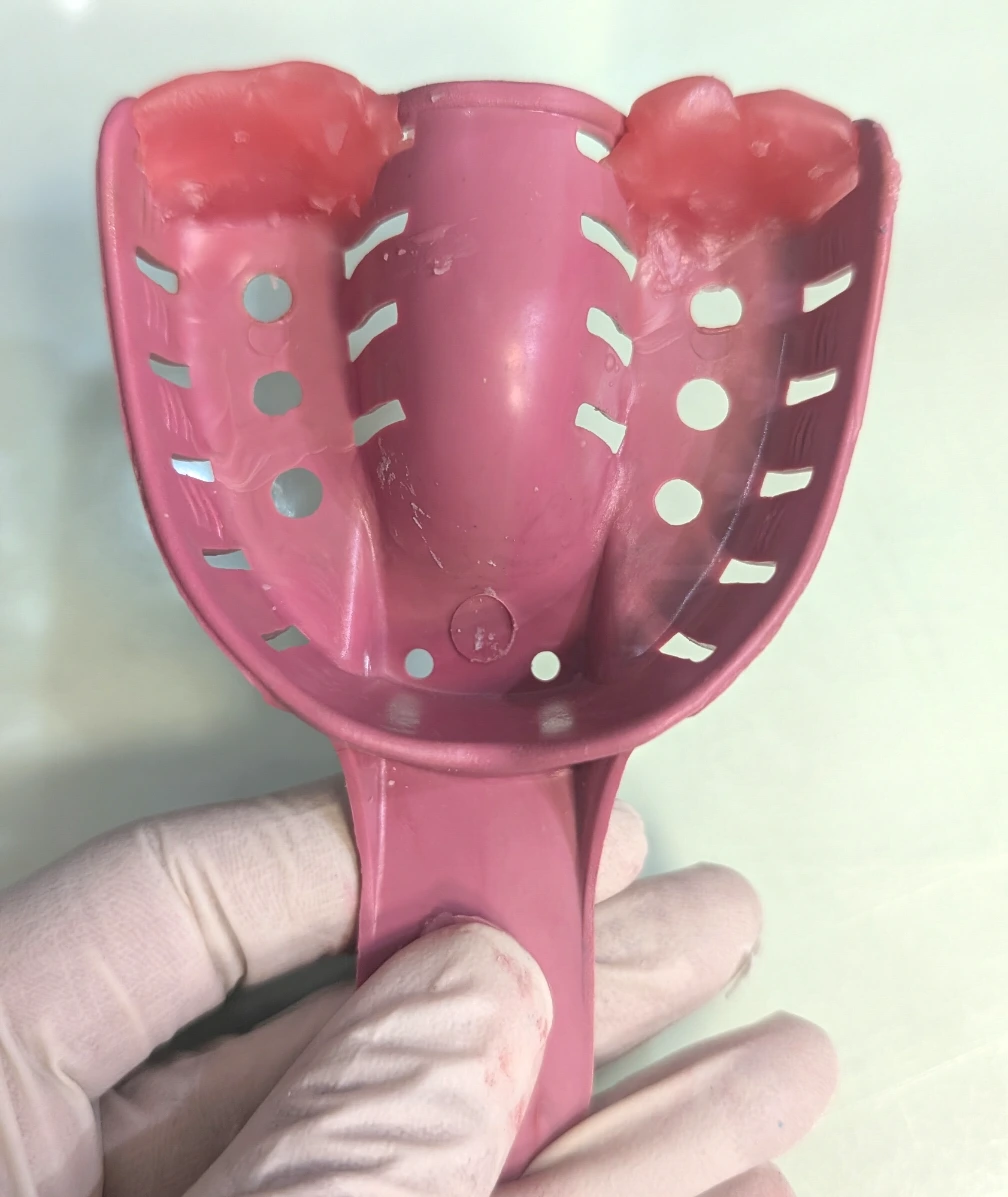
Clinical explanation
- In impression-taking with stock or custom trays, one of the common problems is the escape of impression material from the end of the tray and its movement posteriorly. In addition to increasing the likelihood of a gag reflex, this also creates an important technical error.
- When the material has an escape path at the end of the tray, sufficient hydraulic pressure is not created to compress the material around the teeth. As a result, the thickness of the material in the dental area decreases, and when removing the impression, the material on the terminal teeth undergoes dragging.
- To prevent this problem, before taking the impression the end of the tray can be blocked with wax in the area behind the last tooth and over the ridge. This Posterior Damming closes the escape path of the material and causes the impression material, instead of moving backward, to remain around the teeth and be compressed.
- As a result, the thickness of the material in the dental area is preserved, dragging is reduced, and the terminal teeth are recorded with higher accuracy.
- This simple modification of the tray, especially in cases where accurate recording of the posterior teeth is important, can noticeably increase the final accuracy of the impression.
The content of this page is intended for the educational use of dentists and dental students.