
Insight 36 — Staged Isolation with Teflon Tape; Controlling the Bonding Sequence and Preventing Unintended Contamination
Published:
Last reviewed:
فارسی
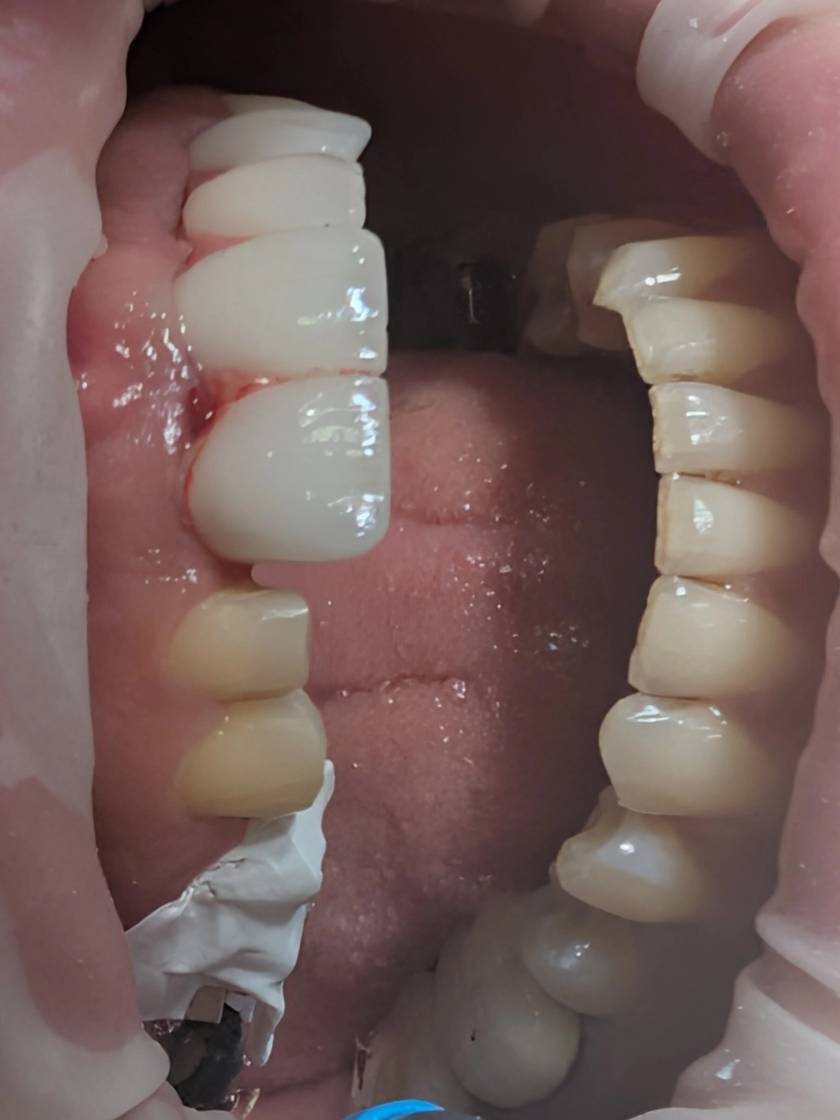
Clinical explanation
- When delivering several veneer units, observing the bonding sequence is vitally important. Teeth whose turn for bonding has not yet come, if exposed to acid, bond, or cement, are effectively taken out of the protocol.
- In this case, the prepared teeth whose bonding turn had not yet come were covered with Teflon tape, and the tape was gently guided into the sulcus so that it would stay fixed in place.
-
This creates two key advantages:
- 1. Prevention of acid contamination (unintended over-etch) — unintended contact of acid with out-of-turn teeth can cause premature etching. Repeating the etch on a surface that has already been altered reduces the quality of the bond.
- 2. Prevention of contamination by bond and cement — unintended contact with bond or cement causes the tooth surface to lose the ideal conditions for bonding at the main stage.
- After placing each unit on the tooth and cleaning it completely, before curing the Teflon tape is removed from the adjacent teeth so that it does not interfere with the precise seating of the veneers.
- Key point: in multi-unit bonding, only the tooth being bonded at that moment should enter the materials cycle. Isolation with Teflon is a simple and effective way to maintain the integrity of the protocol and prevent the premature entry of the other teeth.
The content of this page is intended for the educational use of dentists and dental students.