
Insight 39 — Exiting the Canal Tunnel in C-Shape Teeth: When Post-and-Core Is Not the Only Path
Published:
Last reviewed:
فارسی
Clinical explanation
Moving beyond canal-centered thinking when facing unreliable roots
- In endodontically treated teeth, one of the common errors is to view the restoration automatically through the logic of «post and core»; as if, when the canal cannot be used, the treatment path is also closed.
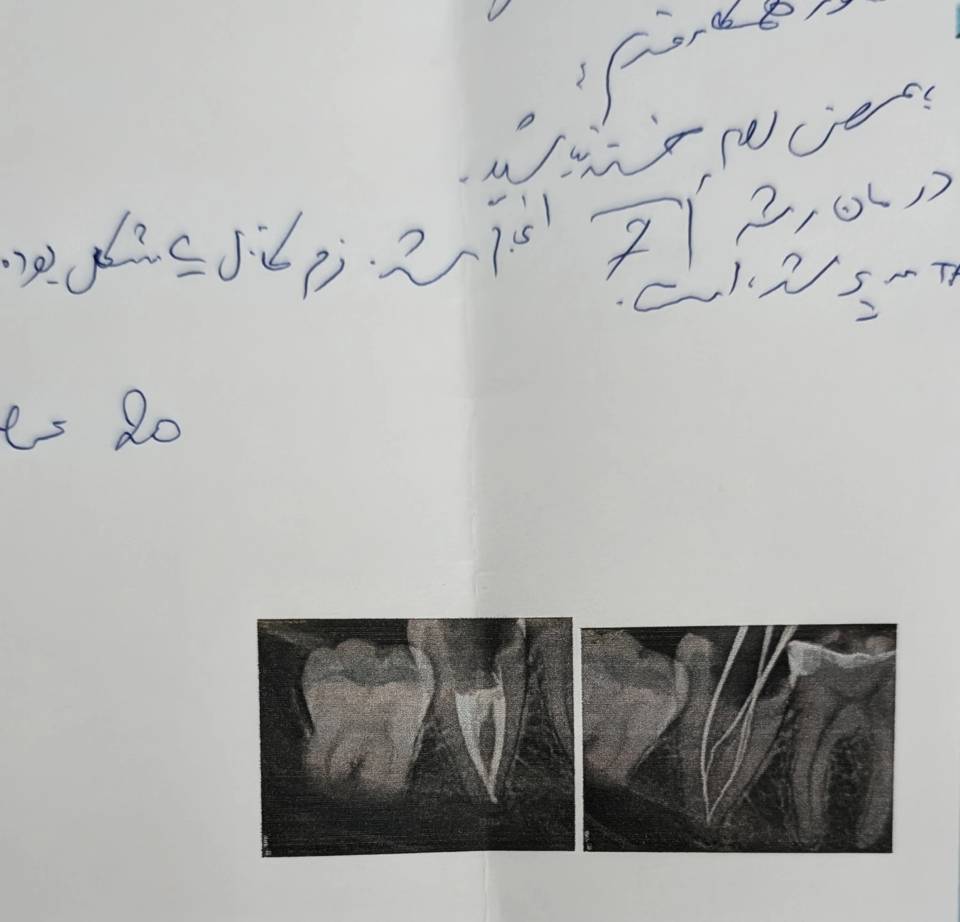
- But in C-shape teeth, the matter is different. The canal anatomy is complex, and using the canal for a post can be limited or high-risk even under normal conditions. In this case, the canals have been filled by the endodontist with MTA, and there is practically no possibility of using the canal as a post pathway.
-
The important point here is:
we must not fall into Tunnel Vision and revolve the entire decision around the question «now what do we do without a post?» - From a prosthetic standpoint, the main question is not whether we can place a post or not; the main question is what type of restoration is more predictable with the remaining tooth structure.
-
In such conditions, depending on the amount of remaining tissue, the height of the walls, the width of the isthmus, the occlusal status, and the need for cusp coverage, other choices can be considered; such as:
Core build-up with amalgam or composite,
cuspal coverage restorations such as onlay,
or, in suitable cases, endocrown as a more conservative and more biomechanical choice. - The treatment logic is that when the canal is no longer a source of retention, it should not be made the center of decision-making. In molar teeth, especially with a usable pulp chamber, retention and resistance can be provided by the coronal design, adhesion, appropriate cusp coverage, and the restoration form; not necessarily by a post.
-
Key point:
In the prosthetic restoration of C-shape teeth, or teeth whose canals have been filled with MTA, the absence of the possibility of a post does not mean the treatment path is closed. Sometimes the right decision is to remove the canal from our mental model and build the treatment based on the coronal architecture and the restoration design.
The content of this page is intended for the educational use of dentists and dental students.