
Insight 46 — When the Buccal Cusp Falls Short in the Smile: Take the Space from the Antagonist, Not from the Cusp
Published:
Last reviewed:
فارسی
Clinical Explanation
When the occlusal space is tight, shortening the cusp is the simplest path; but if that cusp shows in the smile, this simplicity comes at the cost of esthetics
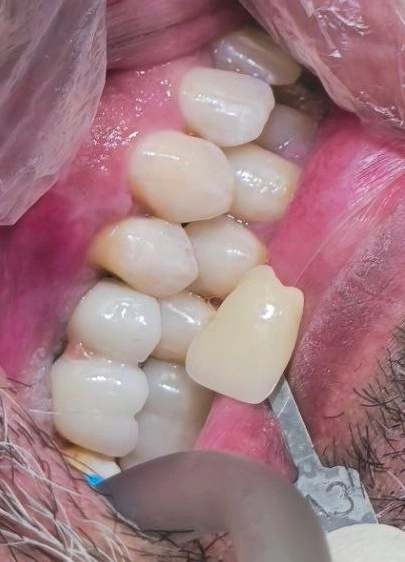
- The posterior implant crowns were sent back to the lab for correction, for two reasons. The first was color. The second was the form of the buccal cusp: the crown's buccal cusp had come out short and disproportionate relative to the adjacent teeth, and this shortness fell in an area that is visible within the smile.
- The cause of this shortness is clear. The opposing tooth has supraerupted and narrowed the occlusal space, and to keep the cusp from striking the antagonist, it was built short. Up to this point the logic of how it was made is understandable; space was limited and the cusp was shortened so it would fit.
- The problem is that this cusp is in the smile. That means its form is not merely an occlusal component—it is part of the final esthetics. When the buccal cusp of a visible tooth is shorter than the neighboring teeth, the eye immediately catches the disproportion. So this form must be corrected, even if correcting it forces us to go to the opposing tooth.
- And the solution is exactly that. The space needed to lengthen the cusp is provided by enameloplasty of the supraerupted opposing tooth. A minor reduction of the antagonist both moves the occlusal plane in the right direction and lets the buccal cusp take on a proportionate form. This is better than fixing an ugly compromise in the smile zone.
- Enameloplasty, of course, has a limit. If the supraeruption is mild, enamel reduction is enough. If it is severe, enamel alone will not provide space and we may reach dentin or sensitivity; there you must turn to larger options (root canal treatment and a crown on that same tooth, or intrusion). But the decision path is the same: take the space from the opposing side, not by shortening a cusp that shows in the smile.
-
Key takeaway:
When the supraeruption of the opposing tooth narrows the space, shortening the buccal cusp is the simplest path, but if that cusp lies in the smile zone, this simplicity comes at the cost of esthetics. In the esthetic zone, keep the buccal cusp form fixed and take the needed space from enameloplasty of the supraerupted opposing tooth that is the culprit of the current situation; and if the supraeruption is more severe than enamel reduction can solve, move to the larger options—but again from the side of the culprit tooth.
The content of this page is intended for the educational use of dentists and dental students.