
Insight 48 — Not All Korean Systems Are One Size
Published:
Last reviewed:
فارسی
Clinical Explanation
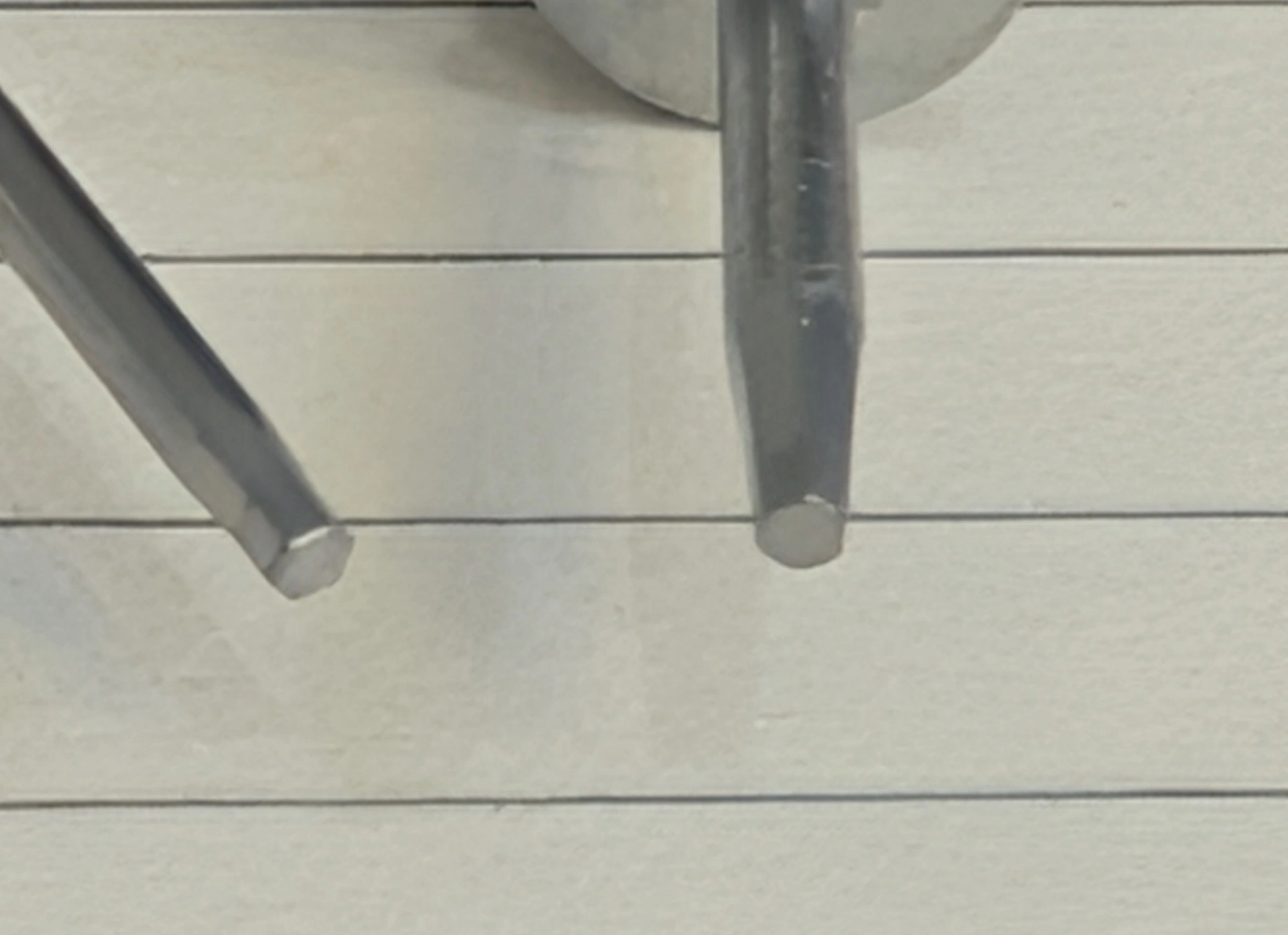
Korean systems are not one same-sized family; their screw heads come in two groups, 1.2 and 1.25 mm, and that tiny difference is enough for the driver to wobble even on a sound screw and, once you apply torque, to genuinely strip a healthy screw
-
The problem
Everyone knows that the drivers of two different brands don't fit each other. The real point is elsewhere. Most of us unconsciously assume the Korean systems are one family and imagine their drivers and screws are interchangeable among themselves. It is exactly this assumption that catches you off guard, because these systems differ in the screw-head size—the very place where the tip of the driver must seat—and the difference is so small that it is neither visible nor expected.
At the chairside it shows itself simply: you go to loosen or tighten an abutment or prosthetic screw, and the driver doesn't engage properly. Either it wobbles, or it doesn't go all the way down, or you feel the screw head has rounded off. The first guess is that the screw has stripped, whereas very often the screw is sound and it is just that the driver and the screw belong to two systems with different screw heads. -
What we know and what is common in Iran
"Korean" is not a single standard. The screw-head size falls into two groups: the 1.2 mm group (Megagen and Osstem) and the 1.25 mm group (Dentis, Dentium, MIS). The whole difference is 0.05 mm; it isn't visible to the eye, but for the driver to seat correctly that much is enough to ruin the job.
Within each group the drivers fit one another; the trouble starts when you jump from one group to the other. In Iran this happens a lot, because Osstem and Megagen (1.2) and Dentis (1.25) are all three widely used, and custom-abutment work is common too. In these cases the screw that comes with the abutment is not necessarily the same system as the driver in your kit. And the screw-head size is determined by the screw itself, not by the body of the abutment. -
Why the problem arises
If the driver is smaller than the screw head (a Megagen 1.2 on a Dentis 1.25) it wobbles and doesn't fully engage; if it is larger (a Dentis 1.25 on a Megagen 1.2) it doesn't go all the way down.
Here is the important point: when you apply torque on a partial engagement, the force rounds off the corners of the screw head. That is, the very moment you think the screw has stripped, if you apply more force or change the driver, that same pressure genuinely strips the screw. The wrong diagnosis itself becomes the cause of the failure.
Diagnosing it is also simple: a size mismatch is apparent from the very first contact on a new screw, but real stripping comes gradually. So on a brand-new screw, if the driver doesn't engage, suspect the size first, not the screw. -
Key takeaway — the solution:
Know the two size groups and match the driver to the screw system, not to the abutment or whatever kit is at hand.
In custom work, find the origin of the screw, because the screw-head size is determined by the screw, not by where the abutment was milled from.
On a new screw, if the driver wobbles or doesn't seat, check the possibility of a size mismatch before applying more force.
Keep both the 1.2 and 1.25 sizes separate and at hand so they aren't picked up by mistake.
The content of this page is intended for the educational use of dentists and dental students.