
Insight 49 — A Crown on an Amalgam-Restored Tooth and Residual Proximal Caries
Published:
Last reviewed:
فارسی
Clinical Explanation
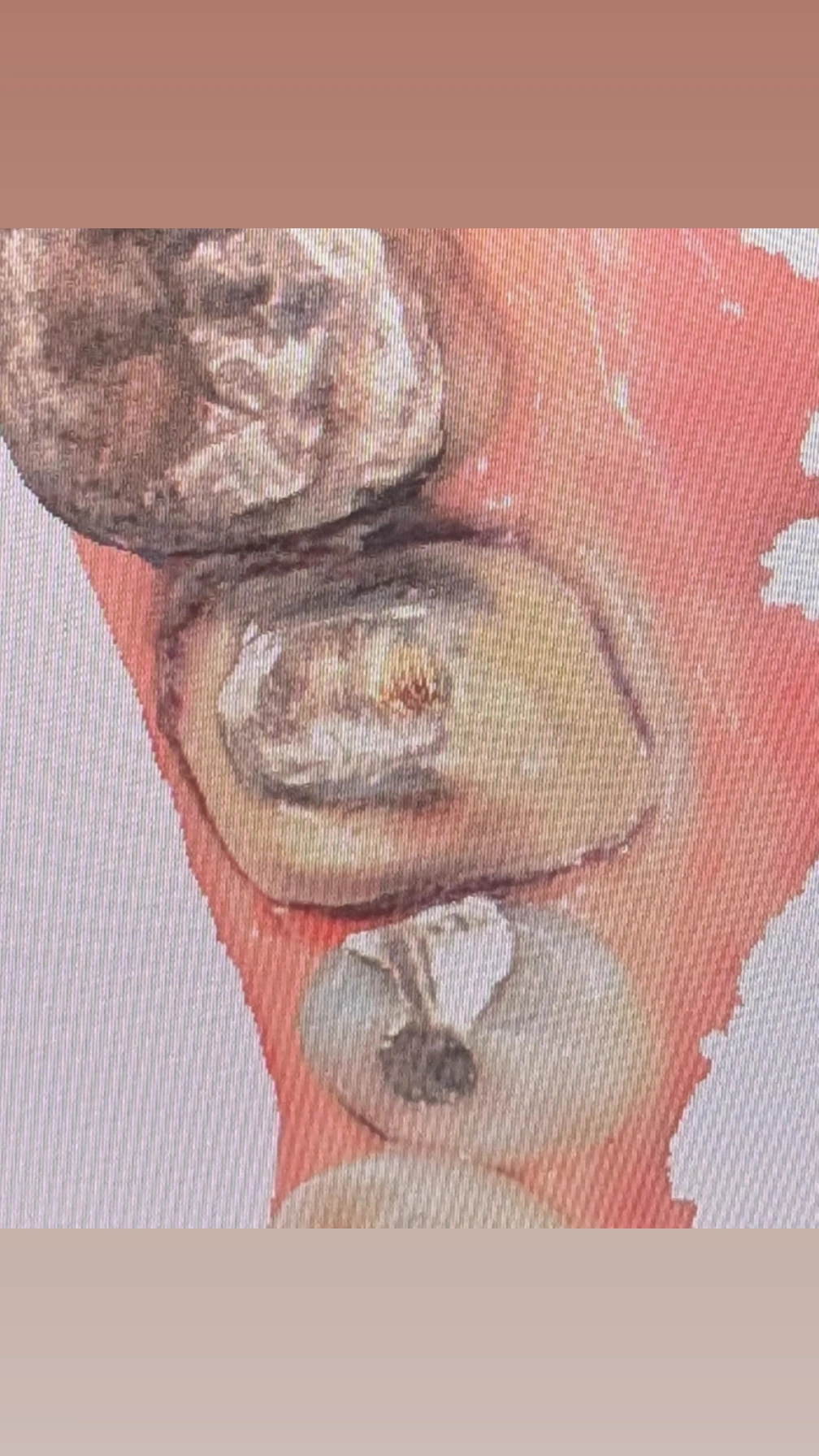
An amalgam-restored tooth has come for a crown and, during preparation, you see residual caries in one of the proximal areas; when the caries is limited, instead of emptying out the whole amalgam, incorporate that area into the proximal box—the box is itself part of the crown-preparation protocol, so the caries is removed without stepping outside the scope of the preparation or doing anything unusual
-
The problem
A tooth previously restored with amalgam—whether we restored it ourselves or someone else did—has come for a crown. Whether this patient and this tooth are even candidates for a crown is a separate discussion, and we are not concerned with it here; we assume the decision to crown has been made and we are at the preparation stage.
During crown preparation you notice that carious tissue still remains and has been left behind in one of the proximal areas. The real question is exactly this: now that we have seen this residual caries, what clinical decision should we make? -
The two paths in front of you
The first path is the default reaction of many: remove the amalgam completely and rebuild the foundation from scratch. The logic is clear too—all of the caries and the entire old restoration are removed, and you start from zero with a fresh core.
The second path is to lean on the crown preparation itself. The proximal box is part of the crown-preparation protocol; so you can incorporate that carious proximal area into the box, so that the caries is removed within the scope of the preparation itself, without stepping outside the routine. -
Why this decision matters
Removing the whole amalgam is not without cost. The removal itself can be damaging and can create subsequent problems; sometimes the harm of removing the amalgam is greater than keeping it.
The point is that placing a box to remove that caries is not something outside the scope of crown preparation; the proximal box is part of the preparation protocol itself and is nothing unusual or beyond the routine. If the caries is limited, removing it this way does not take us outside the scope of the work, nor does it force us to needlessly destroy a sound foundation. -
Key takeaway — the solution:
If the caries is limited, instead of emptying out the whole amalgam, incorporate that carious proximal area into a box.
The proximal box is itself part of the crown-preparation protocol, so by placing the box the caries is removed without stepping outside the scope of the preparation or doing anything unusual.
Remove the amalgam completely only when the caries has gone beyond the limit of the box; in limited caries, removing the whole amalgam can do more harm than help.
The decision criterion is the extent of the residual caries, not the habitual reflex of always removing the entire old restoration.
The content of this page is intended for the educational use of dentists and dental students.