
The Challenge of Shade Change in Ceramic Crowns After Definitive Cementation
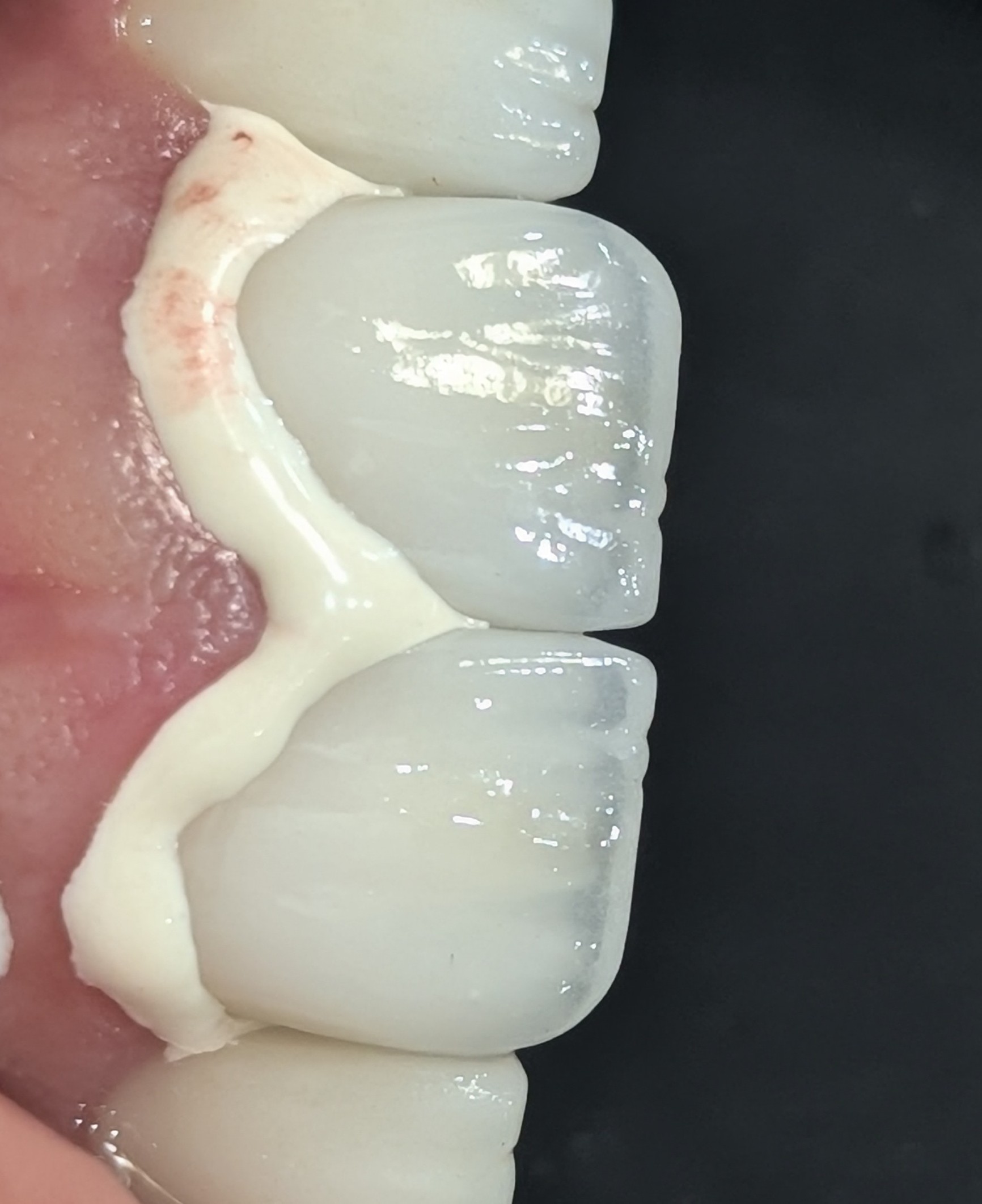
The Clinical Challenge
In some cases, after ceramic crowns (especially zirconia) are delivered with temporary cement, the final result looks very favorable in terms of color and translucency, and the patient is completely satisfied with the appearance of the crown.
But when it comes to the definitive cement, the difference in color and translucency between the temporary and the definitive cement causes the final color of the crown to change, and the patient no longer finds it pleasing.
Analysis of the Problem
This change in appearance is usually due to the difference in opacity and color tone of the definitive cement compared with the temporary cement.
In crowns with low thickness or high translucency, this difference shows itself more, and in some cases even causes the initial esthetic result to be lost.
The Suggested Approach
To prevent this shade change, there are two paths:
- If you use definitive resin cements, choosing a type that has a range of shades and different degrees of translucency (Shade-matched resin cements) can minimize the color difference.
- But if you decide to use conventional cements, it is better to choose a cement that is closer to the temporary cement in terms of opacity and color.
- In this case, zinc phosphate cement is a suitable option; because in terms of color and translucency it is more similar to temporary cements and reduces the likelihood of a change in appearance.
The content of this page is intended for the educational use of dentists and dental students.