
Insight 50 — Gingival Contouring Without a Temporary Crown
Published:
Last reviewed:
فارسی
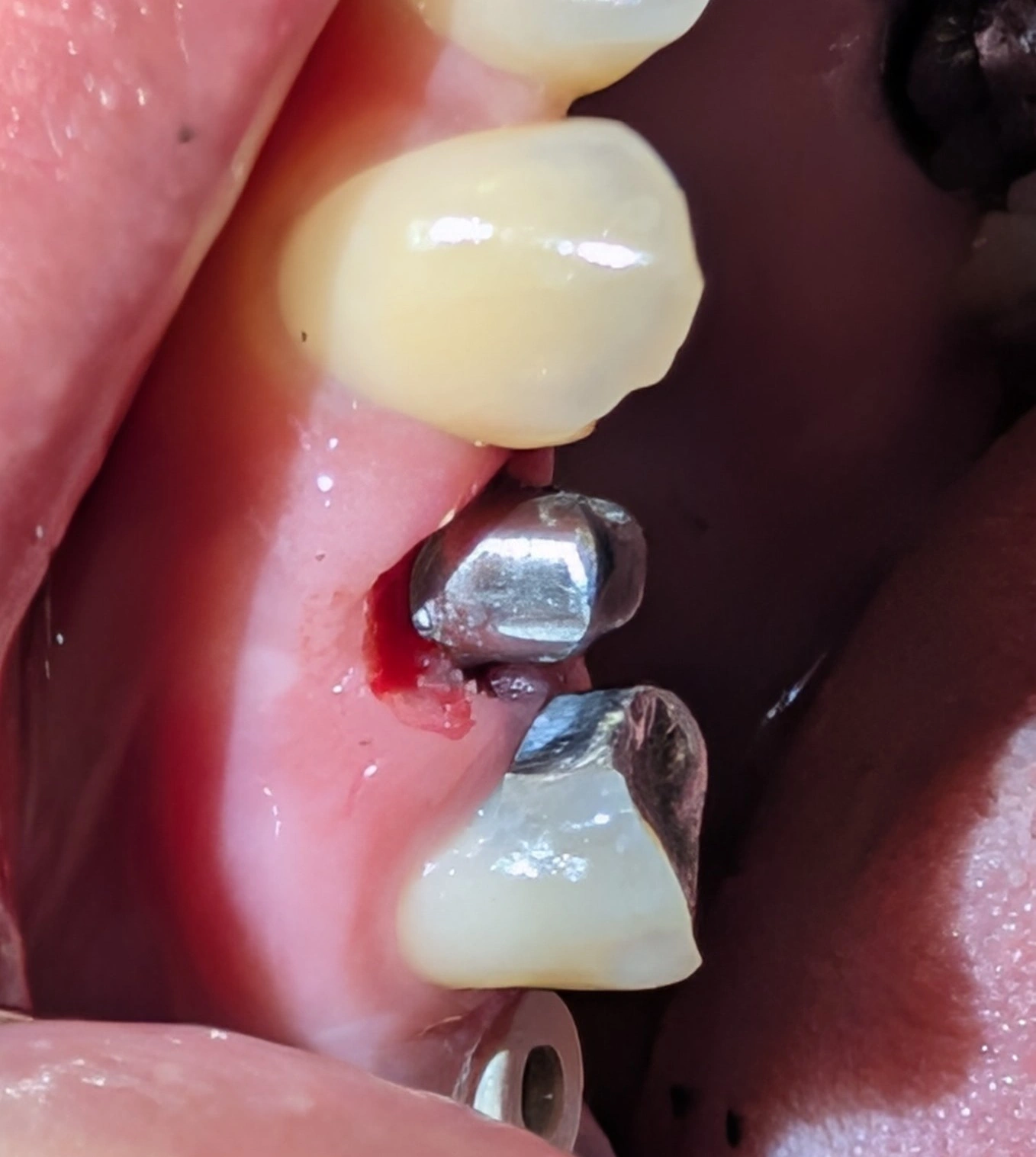
Clinical Explanation
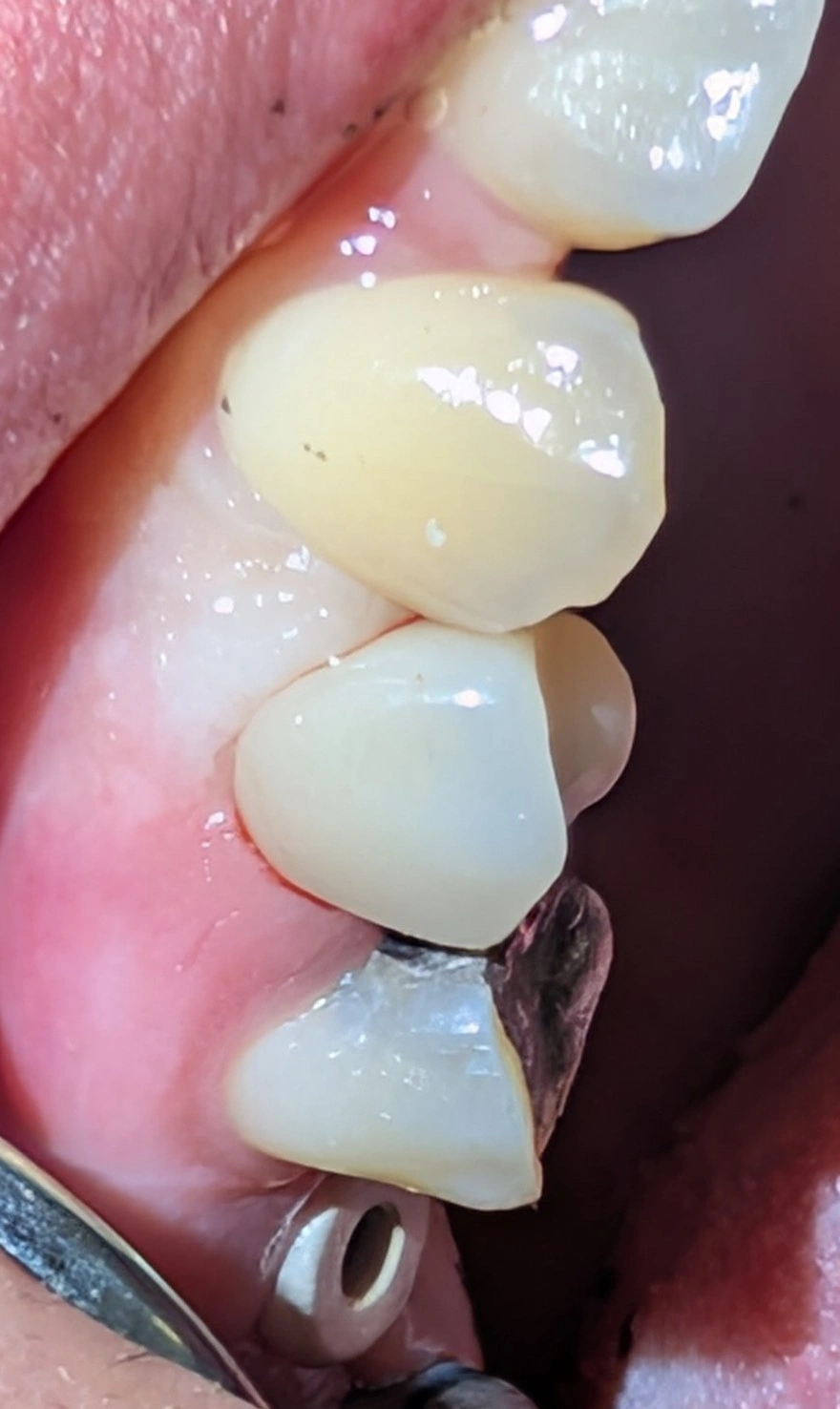
When a healing abutment is seated, a round, narrow gingival profile forms that does not match the diameter of the final abutment or the anatomic form of the tooth; in posterior, non-esthetic areas, if there is adequate keratinized gingiva, instead of weeks of staged shaping by exchanging healing abutments or using a provisional, the gingiva can be recontoured directly with a bur and gingivectomy before placing the final crown
-
The problem
In the standard protocol, when a healing abutment is seated, a round, narrow gingival profile forms whose diameter does not match the diameter of the final abutment or the anatomic form of the tooth.
The common way to solve this is gradual tissue shaping over several weeks, either by exchanging healing abutments or with a provisional restoration. This approach works, but it is time-consuming. -
The alternative approach
In cases where the patient has an adequate volume of keratinized gingiva, I replace this lengthy stage: I seat the final abutment, and before placing the crown, I directly recontour the surrounding gingiva with a bur and gingivectomy.
Technique: In the proximal areas, I use a thin bur in a vertical direction to create space for the crown margins so the margin has somewhere to seat. In the buccal, I shape the tissue for the ridge-lap area so the crown seats without extra pressure and with a clean transition over the tissue. -
Why this decision matters
The result is that the gingiva takes shape very quickly and the crown seats easily into place, without needing several weeks of gradually changing the healing abutment's shape to prepare the tissue. -
Key takeaway — the solution:
The prerequisite for this technique is an adequate volume of keratinized gingiva. If the width of keratinized tissue is limited, this amount of tissue should not be removed, because the width of keratinized mucosa is tied to peri-implant health.
While burring, you also need to be careful that the bur tip doesn't scratch the abutment or implant surface, and that the depth of tissue removal doesn't go far enough to violate the supracrestal attachment.
This technique is better suited to posterior, non-esthetic areas, because in the esthetic zone, the staged approach with a provisional gives more predictable control over the final gingival margin level.
The content of this page is intended for the educational use of dentists and dental students.