
Insight 55 — Prosthetic Splinting: Managing the Biomechanics of Teeth with Short Roots
Published:
Last reviewed:
فارسی
Clinical Explanation
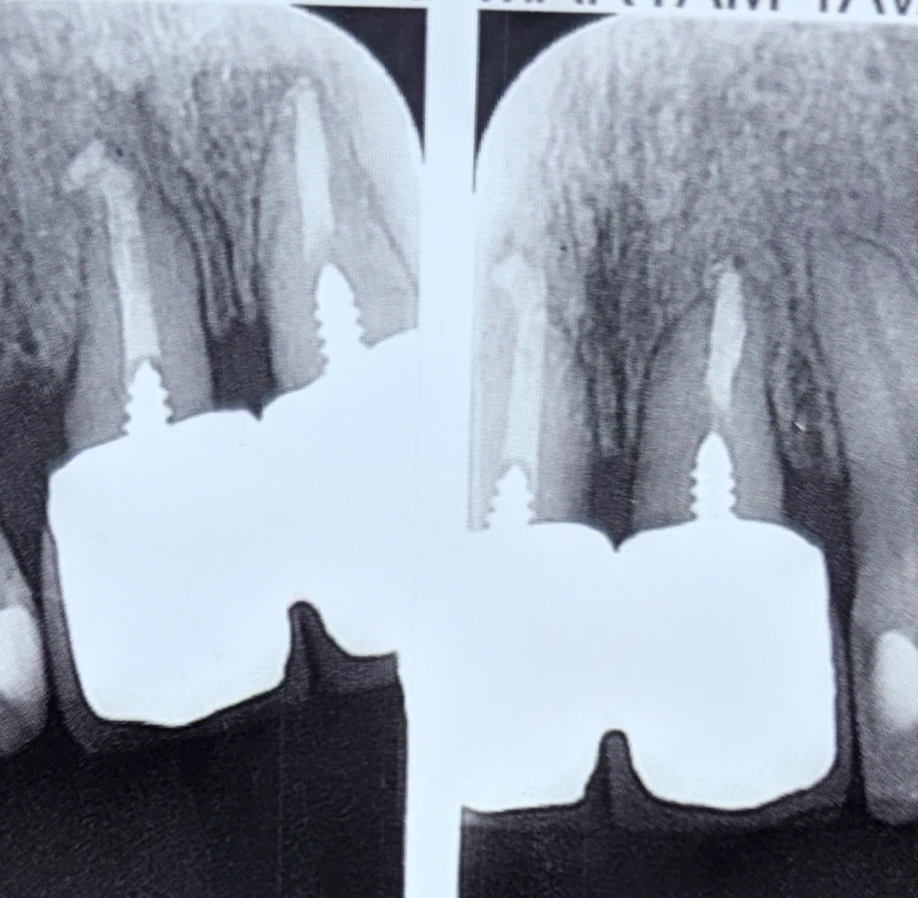
When the roots of two anterior teeth are severely short and neither can withstand functional forces alone over the long term, the biomechanical treatment strategy can be to splint their crowns together — provided the abutment teeth are comparable and at the same level in strength and root status
-
Case Description and Initial Challenge
The patient presented with two very long crowns in the anterior region that looked unpleasant and unnatural in terms of esthetic proportions. The teeth had previously undergone crown lengthening surgery, but the patient was still strongly dissatisfied with the shape, palatal bulk, and appearance of the crowns.
The main challenge in this case was the severe shortness of both teeth's roots, which put them on the verge of being lost. -
Step One: Initial Assessment and Managing Patient Expectations
Initially, a conservative approach was attempted without replacing the crowns — reducing the excessive cingulum bulk on the palatal surface to reduce the patient's discomfort.
At this stage, the patient was told that, given the severe root shortness, the risk of losing these teeth during any intervention was very high. Nevertheless, because the patient could not tolerate the shape of the previous crowns, they requested replacement and accepted the risks of treatment. -
Step Two: Removing the Crowns and Correcting the Preparation (Re-preparation)
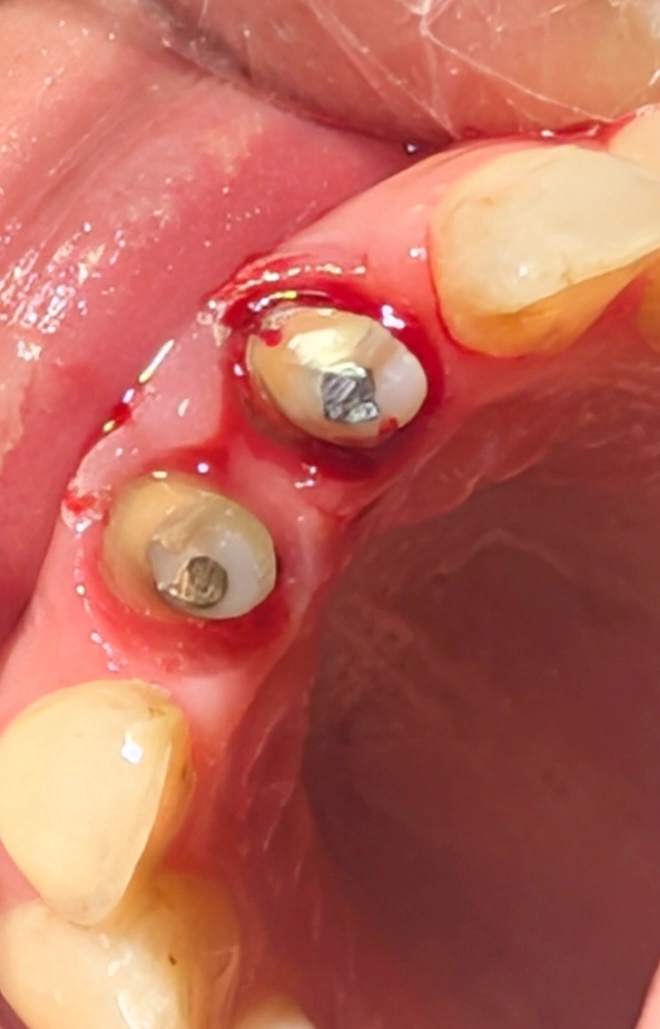
After cutting off the previous crowns, it became clear that the palatal preparation had been done very improperly and unsystematically, and that this incorrect bulk and contour was the main reason for the patient's intolerance.
At this stage, the preparation was corrected (re-prep) with a proper palatal contour, observing structural considerations. -
Step Three: Final Treatment Plan and Biomechanical Strategy
Given that the roots were very short, neither tooth alone had sufficient capacity to withstand functional forces long-term. Under these conditions, our biomechanical strategy was to splint the crowns together so they would support each other and extend the teeth's lifespan.
This decision was possible because both teeth were comparable in root resorption and strength. -
Step Four: Provisional Phase and Monitoring
A splinted provisional restoration was delivered to the patient, and the teeth were monitored for 2 to 3 weeks to evaluate the shape, phonetics, palatal contour, and the patient's satisfaction with the new structure.
After final approval of this phase, the two permanent splinted crowns will be fabricated and delivered. -
Key Takeaway
Sometimes, to improve biomechanical conditions, we have to splint crowns together; but the critical condition for doing so is that the abutment teeth be comparable and at the same level in terms of strength, capacity, and root status.
The content of this page is intended for the educational use of dentists and dental students.