
Insight 63 — Why I Didn't Pack Cord Before the Scan for This Patient
Published:
Last reviewed:
فارسی
Clinical Explanation
When dissatisfaction with the contour of implant crowns coincides with inflammation of the surrounding soft tissue, sometimes the best decision is to leave the preparation untouched and postpone cord retraction and fluid control until the final phase, so the lab can correct the contour with a shorter margin while giving the soft tissue a chance to heal
This note is about an unconventional decision made midway through a prosthetic-implant treatment. The patient was unhappy with the crown form, and the soft tissue around their implants was inflamed; going ahead with cord retraction and fluid control under those conditions could have made things worse. The decision I made looked, at first glance, like a departure from the usual protocol.
-
Clinical Explanation
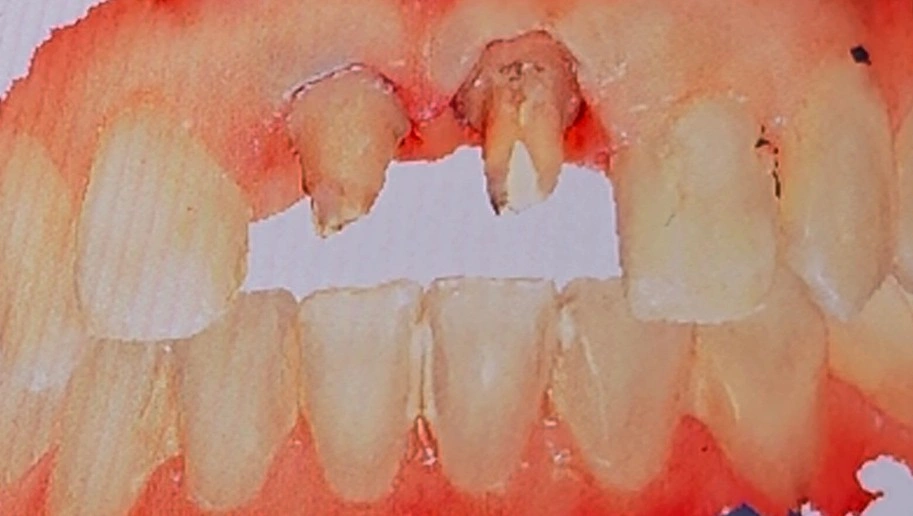
The patient was unhappy with the form and contour of two anterior crowns, and the gingiva around the implants was also inflamed. Instead of the usual approach, I decided to proceed without cord retraction or fluid control so the lab could fabricate the provisional crowns with a shorter margin. This strategy gave the gingiva a chance to heal well alongside reviewing the new contour; for the final stage, however, re-preparation and a repeat scan for accurate margin registration will be required. -
The Usual Approach to Contour Correction
Generally, when a patient is unhappy with the form of their previous crowns, the workflow is clear: we remove the crown and place a corrected provisional crown intraorally. Once the patient has approved the new form and contour over a defined period, we tell the lab to fabricate the final crown from the same original preparation (or to apply any specific contour changes desired). Because the preparation hasn't changed in this scenario, the work proceeds fairly straightforwardly. -
The Problem in This Case
But the conditions in this patient were different. Alongside their dissatisfaction with the crown form, we were facing inflammation of the soft tissue around the implants. The field was full of blood and inflammation, and under these conditions further manipulation of the tissue was not advisable. -
What I Did (A Strategic Retreat)
At this stage I decided not to modify the preparation. Given the condition of the soft tissue, I neither packed cord nor made any attempt at fluid control.
What was the result? Faced with this situation, the lab had to make the provisional crowns' margins somewhat shorter. When I delivered these new margin-shortened crowns to the patient, two important goals were achieved simultaneously:
1. The new contour and form were reviewed and approved by the patient.
2. The soft tissue was released from the pressure of the previous margins, and the gingiva moved toward full healing. -
Moving Toward the Final Restoration, and the Bottom Line
Now that the gingival inflammation has resolved and we're satisfied with the contour, we want to move into the phase of fabricating the final crown. The key difference between this case and a routine one shows up right at this stage: I can no longer tell the lab to "proceed from the same original preparation and scan."
For the final restoration, I now need to re-prepare the tooth, control fluids properly, pack cord correctly, and finally take a new, accurate scan or impression to register the final margins. Sometimes, to reach an ideal clinical outcome, you have to give the soft tissue a stage of time and deliberately depart from routine protocols.
The content of this page is intended for the educational use of dentists and dental students.