
Insight 74 — A Dry Field for Scanning: The Role of the Cotton Roll in Removing Moisture, Not Just Saliva Control
Published:
Last reviewed:
فارسی
Clinical Explanation
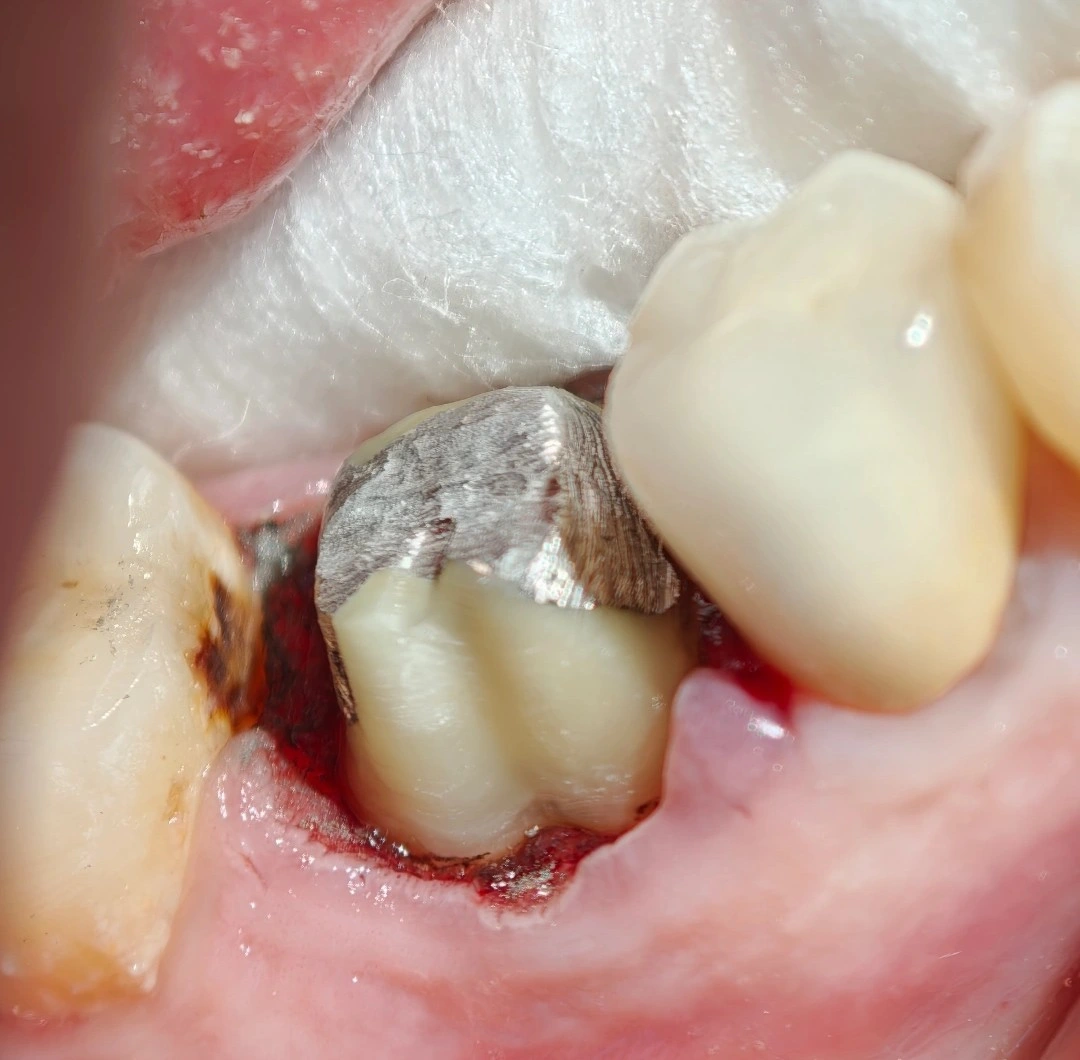
A dry field at the moment of scanning is usually assumed rather than checked, while moisture returns to the tooth surface after air drying. This note follows a small shift in the sequence of work, in which the cotton roll takes on a task other than controlling the tongue and the saliva. The difference between displacing moisture and removing it is what shows up in the capture of the margins.
-
Why a dry field matters
For an intraoral scan, a dry field matters a great deal. The problem that arises in practice is that after air drying, moisture returns to the tooth surface from the area under the tongue and around the teeth, and this moisture is not collected completely by suction either. -
What the cotton roll is really for
My method is to use a cotton roll, but its main purpose is not to control the tongue and the saliva under the tongue. The point is that when there is no cotton roll in the field and I air dry the tooth, the moisture around the tooth is only displaced and stays in the field. But when a cotton roll is placed next to the tooth, air drying drives the moisture towards the cotton roll and it is absorbed by it. In this way the moisture is effectively removed from the field, rather than merely transferred from one point to another. -
The sequence of work
The sequence of work is as follows: I place the cotton roll next to the tooth, air dry the tooth so that the surrounding moisture is taken up by the cotton roll, and immediately before scanning I remove the cotton roll so that it does not get in the way, and then I scan. -
The result
The result is that the tooth surface and the margins are genuinely dry at the moment of the scan, and the accuracy of the scan increases.
The content of this page is intended for the educational use of dentists and dental students.