
Insight — An Implant Abscess in the Esthetic Zone; the Hidden Culprit: Residual Cement
1) The clinical story
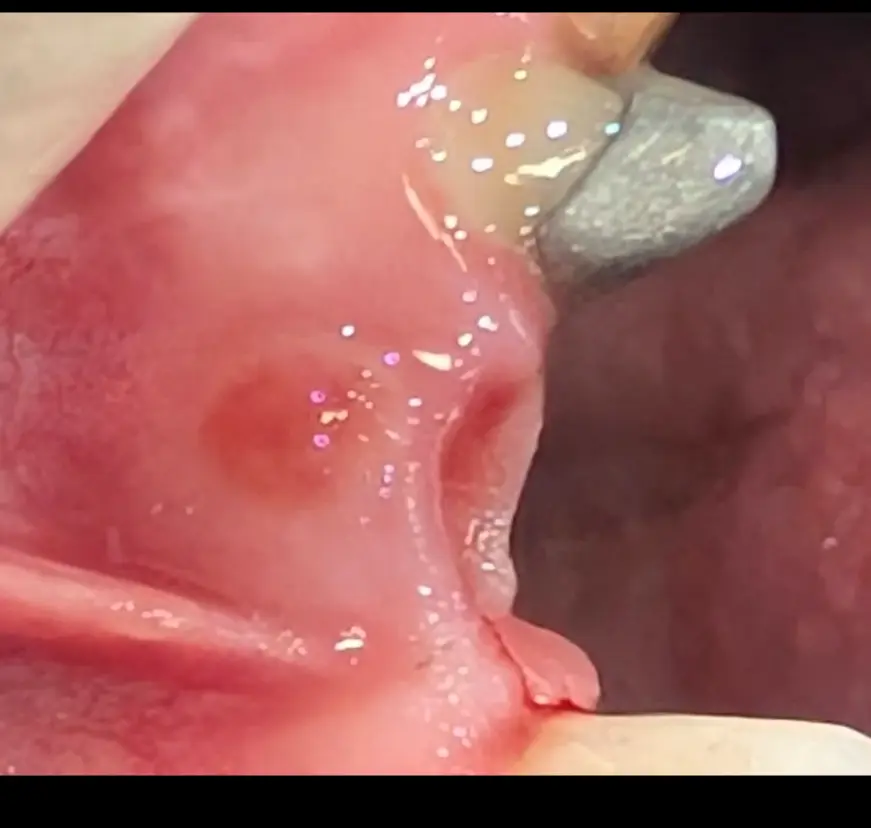
A young patient presented with an implant at the left central incisor (tooth 1); esthetic treatment of the anterior region was planned.
The implant crown had an esthetic problem and a decision was also made to replace it; but the presence of an abscess in the implant area complicated the treatment path.
The initial surgeon opened the implant area, cleaned the region, and placed bone powder; but the abscess returned.
From the surgeon's view, the definitive treatment was removal of the implant.
But no surgeon was willing, in a young patient and a fully esthetic zone, to accept the risk of damage to the buccal plate.
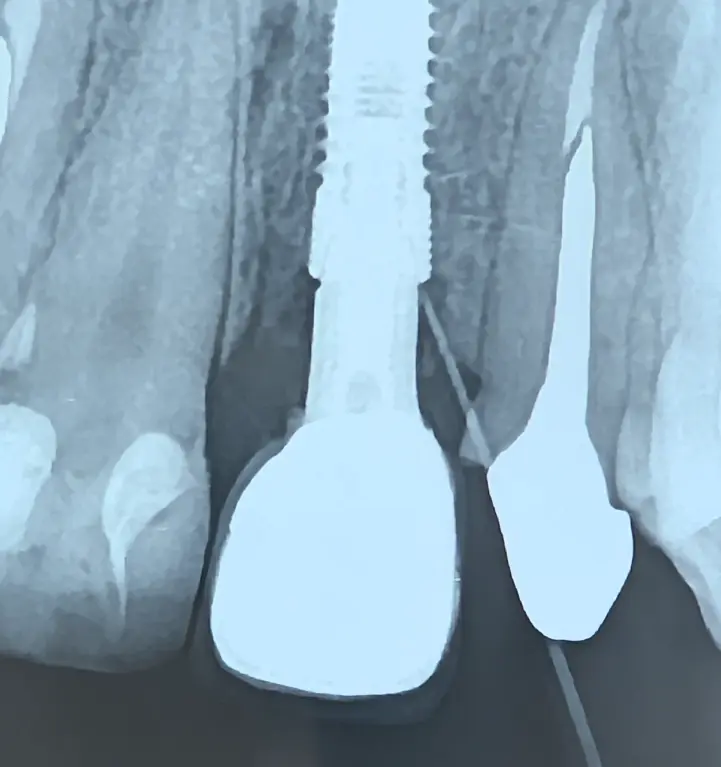
Ultimately, by tracing the path of the abscess, it became clear that the source of the abscess was the implant connection — not the bone and not the fixture. Therefore there was no need to remove the implant.
2) The turning point of the treatment
The next question: why is the connection the source of the abscess?
At the impression session, it was decided to first replace the crown and abutment and then assess the healing process.
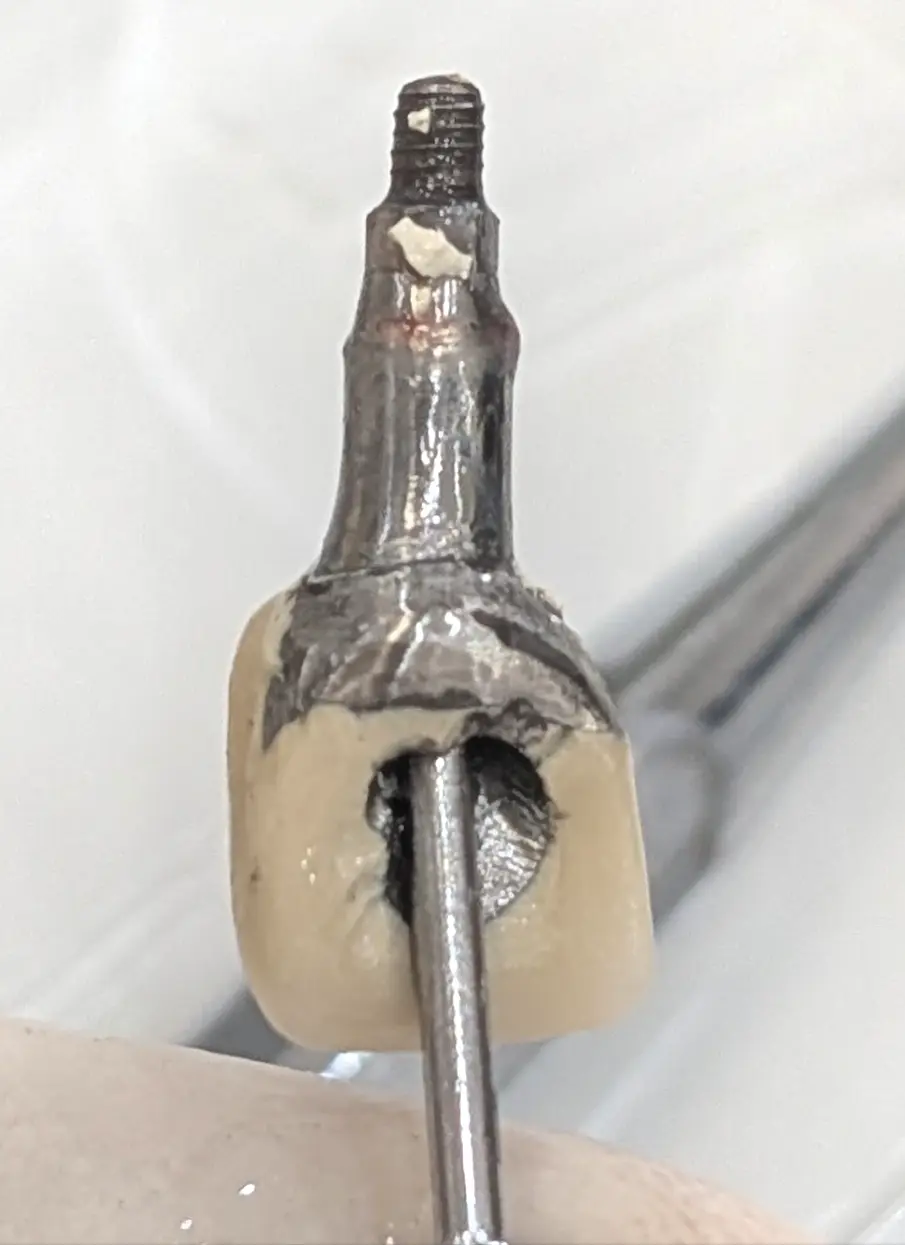
To access the implant screw, an opening was made through the back of the crown and the crown was removed.
3) The key point that clarified everything
After removing the crown it became clear:
Residual cement inside the connection had been the cause of the chronic inflammation and the abscess.
Key points:
- Trace the abscess.
- Take the danger of residual cement seriously.
4) Treatment summary
The entire connection area was thoroughly cleaned.
The previous abutment and crown were washed and disinfected.
The same previous crown was re-seated in place as a temporary crown.
By removing the primary source of inflammation, the abscess will resolve without the need for surgery.
The content of this page is intended for the educational use of dentists and dental students.