
Share Hub — Key Principles for Optimizing the Accuracy of Intraoral Scans in Implants
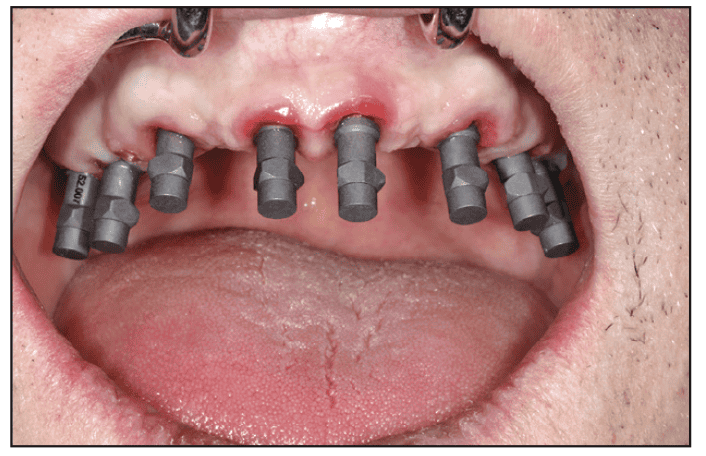
With the widespread use of digital scanners, the impression has formed that "intraoral scanning" is a simple process requiring no specialized skill. But just like conventional impression-making, this process is built on defined principles, and correct adherence to these principles is essential for achieving acceptable accuracy (Accumulated distortion). The aim of this review is to examine the key factors that play an important role in optimizing scan accuracy (Guide to Optimizing the Accuracy of Intraoral Implant Scans: A Review Article – Çise Özal).
Neither aimless haste, nor long pauses
The scan should be performed continuously and uniformly. A uniform and faster scan reduces the number of extra frames, because fewer frames mean a simpler overlapping process and less accumulated distortion. Conversely, long pauses or irregular movements produce more frames, make image matching difficult, and reduce the final accuracy of the scan.
A logical boundary for the scan
When we only need the information of one quadrant, limiting the scan to that same area increases accuracy. In full-arch scans, the number of frames and the amount of overlap increase, and the likelihood of accumulated distortion rises.
Control the ambient light
Very high or very low light intensity causes reflection and noise and reduces the accuracy of image matching. According to the evidence in this article, the best condition is when the unit light is off and only the room light is on; this condition improves scan accuracy considerably.
Scan only the necessary information
Scanning areas that are not necessary (such as high palates) can reduce accuracy. If not needed, the palate should not be scanned, to prevent an unnecessary increase in distortion.
Scanner tip size and accuracy
Scanners are supplied with different tips. Larger tips usually produce fewer images, which helps increase precision and trueness. The overall trend shows: larger head → more stable scan → less accumulated error. In wider areas, larger tips often provide higher accuracy.
Appropriate scan body selection
According to the article's results, metal scan bodies have greater dimensional stability and provide higher accuracy. In contrast, PEEK scan bodies may become deformed as a result of screw tightening or sterilization, and their repeated use can reduce the accuracy of implant registration; therefore their use should be limited and controlled.
The distance from the tip to the scanned surface
Every scanner has a specific ideal distance. Moving the tip away from this distance, or getting much too close, reduces accuracy. The Miyoshi study showed that as the distance increased, precision dropped noticeably. A constant, controlled distance according to the manufacturer's instructions must be maintained to prevent noise, loss of detail, or increased distortion.
Dryness of the scan area is essential for accuracy
The presence of saliva or blood disrupts the optical pattern of the scan, weakens the reference points, and causes errors in the image-matching process. The consequence of these conditions is a considerable reduction in scan accuracy and an increased likelihood of distortion in the digital intraoral impression.
Guide to Optimizing the Accuracy of Intraoral Implant Scans: A Review Article:Çise Özal