
Critique of an Instagram Case with a Retrofit Post
An Instagram video showed a case titled “reverse post and core.” The anterior teeth under the old crowns had caries and extensive destruction. On one side there were three splinted crowns on teeth 1, 2 and 3, and on the other side two splinted crowns on teeth 1 and 2. The clinician explained that the patient did not want new crowns and that the margins were sound. So the crowns were kept and a retrofit post was made for them. In my opinion, this decision and its result can be criticized on several grounds.
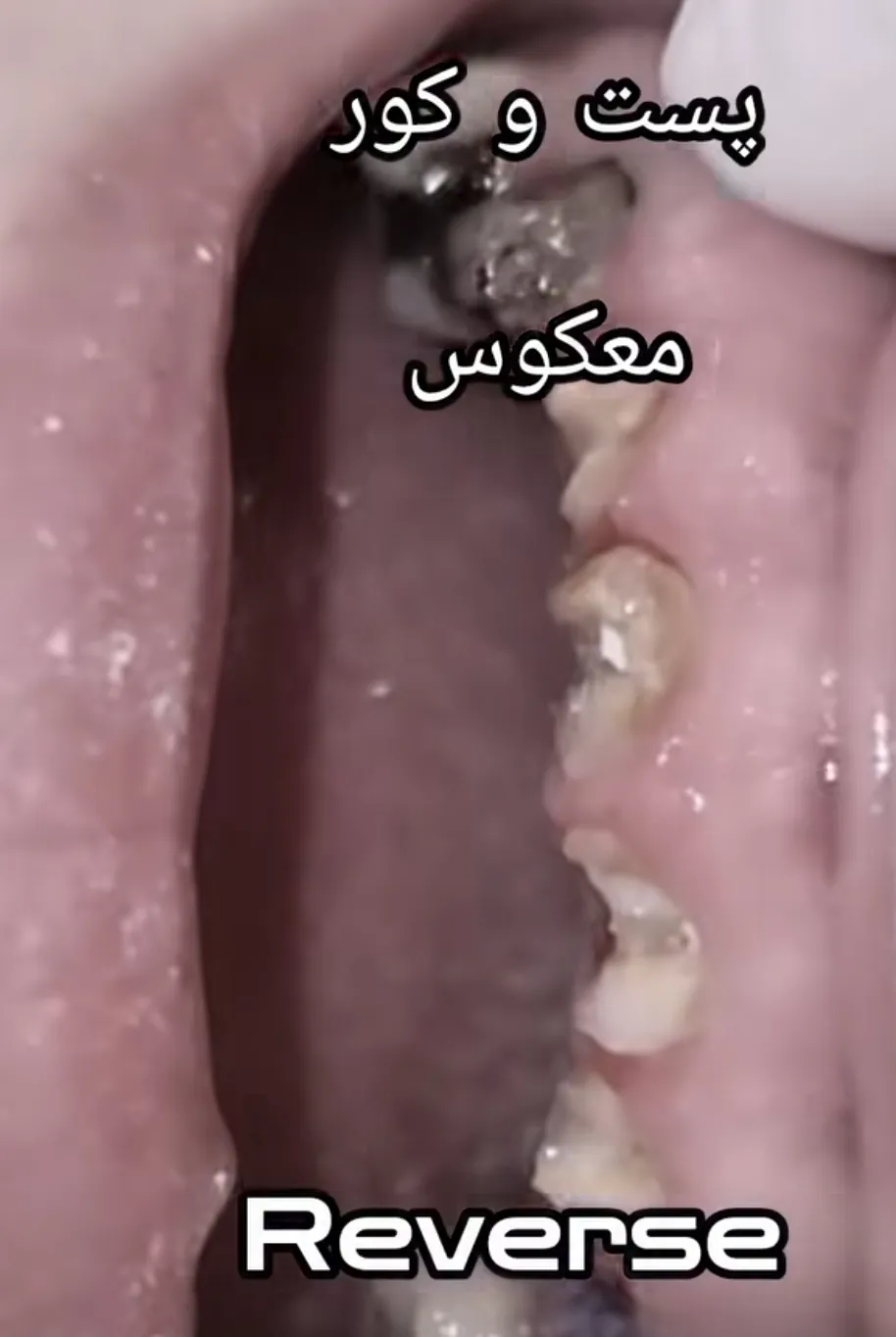
∆ A sound margin and a destroyed tooth do not go together
A sound margin does not only mean that the crown edge is not broken or detached. The margin must be both intact and well adapted. The main question is where the destruction seen in Figure 1 came from. There are two possibilities.
If the teeth had this much destruction from the beginning, the crowns were made on teeth that never had an adequate foundation. Now the same crowns are about to be delivered to the patient again.
If instead we believe the teeth were not like this at first and were destroyed later, caries under a crown does not develop without a route of entry. The most likely route is the same lack of adaptation at the margin.
In both cases, “the margins are sound” is not a convincing reason for keeping these crowns.
∆ On the patient’s wishes
It may be said that the patient could not afford new crowns. But the treatment plan is the clinician’s responsibility, and the patient’s financial limit does not change the biological condition of the teeth. These five teeth would have had a better chance of being kept if each had been treated separately and carefully. But with retrofit posts under splinted crowns and without the necessary precision, the risk of failure is high and the process ends in extraction of the teeth. In the meantime the patient also faces problems such as bad breath.
After extraction, the treatment path leads toward implants. But a patient who could not afford new crowns in the first place may not be able to afford implants later. In that case the only remaining option is a Class IV partial denture, the very treatment that keeping the crowns was meant to prevent, now imposed on the patient with the loss of five anterior teeth. The patient’s financial limit cannot justify the result seen at the end of this same video.
∆ A retrofit post, and for splinted crowns at that
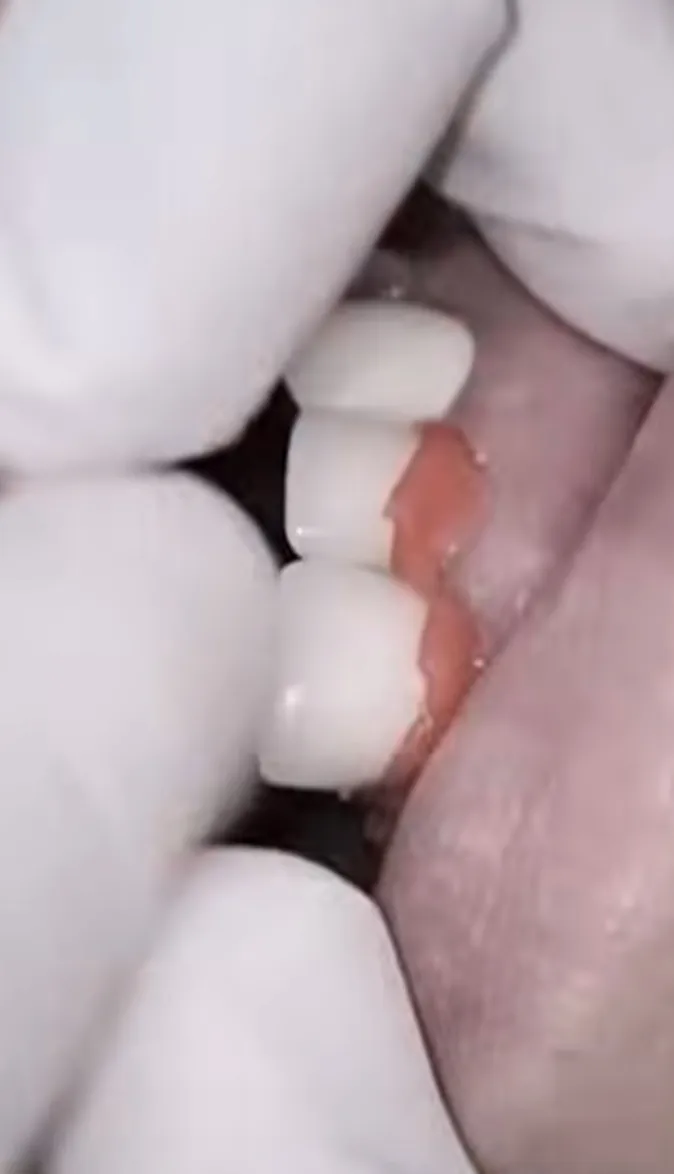
A metal retrofit post is highly technique-sensitive. The resin pattern may fit well in the mouth, but the metal post returning from the laboratory may not have the same fit. The sprue attachment on the pattern must be cut and finished after casting. If this is not done precisely, the core form changes and no longer matches the inner surface of the crown.
So the chance of error is high even for a single crown. In this case, five retrofit posts were placed under two sets of splinted crowns. Each post has to seat exactly in its place, and because the crowns are one piece, the error of any one of them affects the seating of the whole segment. This is error on top of error.
∆ Cementing the post and crown at the same time
The clinician explains that in this method the posts and crowns are cemented at the same time, because the crowns determine the correct path and position of the post. This argument would have been valid only if two conditions held together: the metal post is an exact copy of the resin pattern, and the post has enough freedom inside the canal for the crown to guide it into place during cementation. Neither condition holds in practice. After casting and cutting the sprue, the metal post is not an exact copy of the pattern, and the post has no freedom inside the canal. The post is made for one specific position and must seat in that position. If there is even the smallest deviation, the crown cannot compensate for it, and the post in the canal and the core in the crown bind against each other.
In addition, when two layers of cement set at the same time, the chance of error increases. The cement inside the canal resists the seating of the post, and if the post does not seat completely, the crown also sits higher than its correct position. In that case it is no longer possible to tell at which stage the error occurred.
This problem is multiplied in splinted crowns. In a single crown, if the post does not seat completely, only that crown sits high. But when the crowns are connected, it is enough for one of the posts to fail to seat and stay high. Then the whole assembly cannot seat completely, and all the crowns of that segment run into trouble.
∆ What can be seen in the video itself
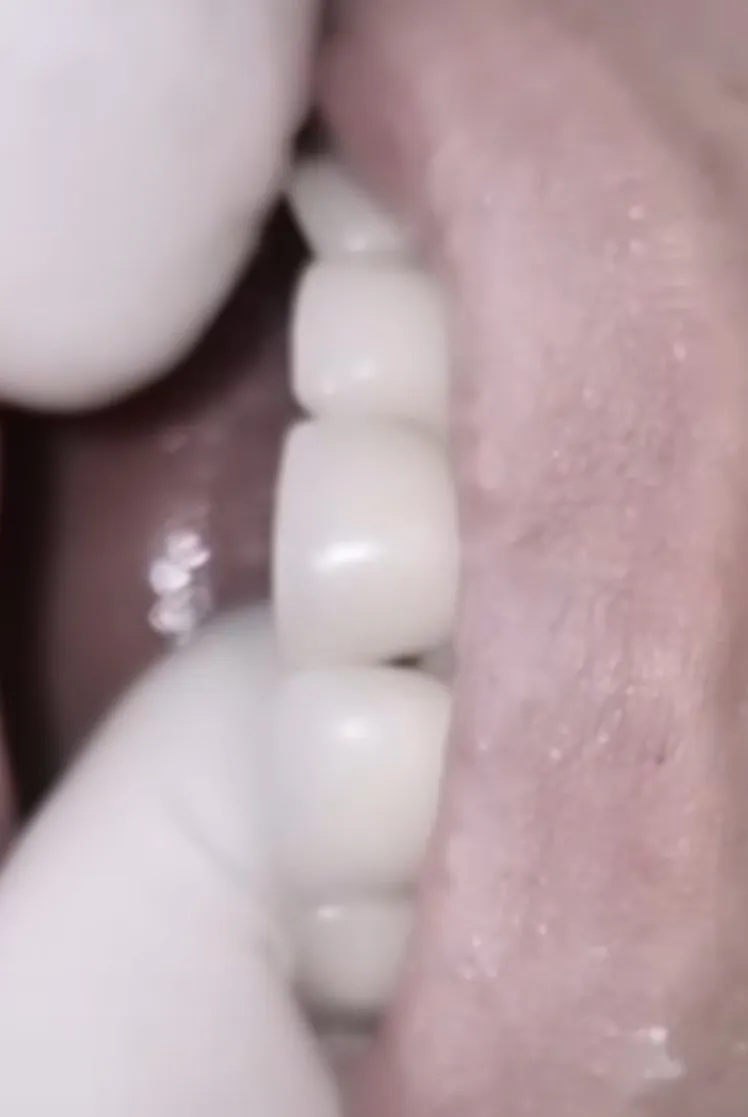
At the try-in stage, the crowns of the two central incisors are level with each other and no diastema is visible between them.
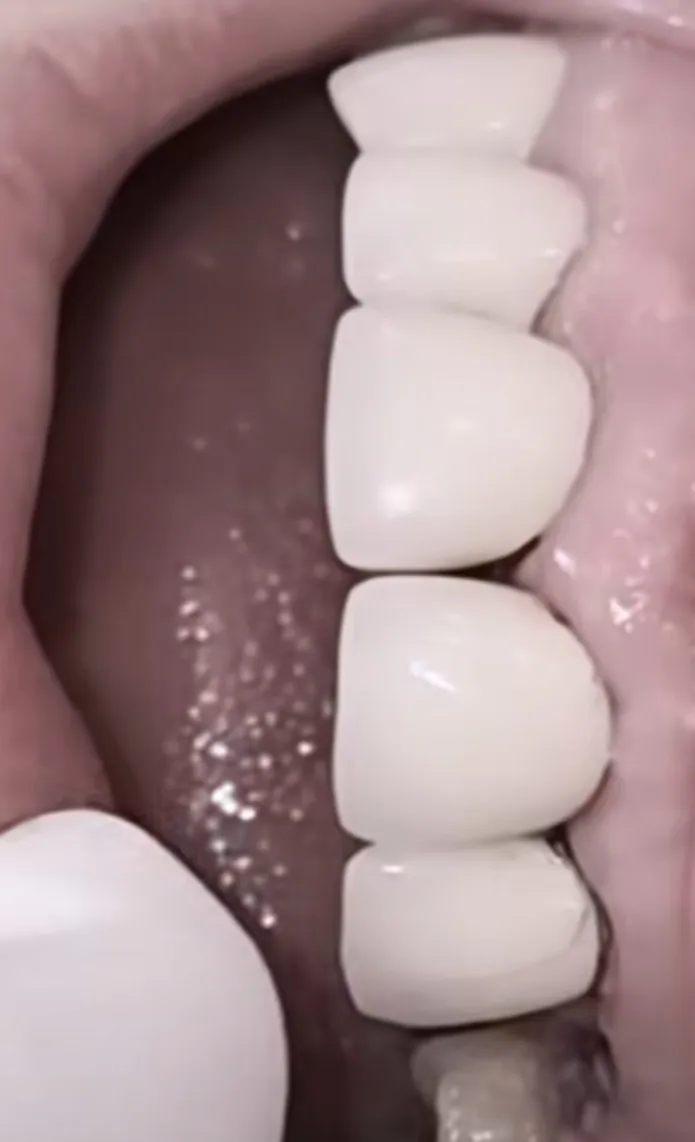
But at the end, when the crowns are seated on the posts, a diastema has appeared between the central incisors and their incisal edges are no longer level. The video also shows the crown actually rocking.
This is the same error described in the earlier sections: at try-in everything is in its place, but with a cast post and simultaneous cementation, the crowns sit in a different position. The final result is not a limited but acceptable treatment; it is work that has been flawed from the first day.