
Occlusion in Restorations and Crowns: How Do We Preserve and Adjust the Patient’s Occlusion?
We usually turn to checking the occlusion only after a restoration or crown is finished. We mark the contacts with articulating paper and, if something is high, we adjust it. But the authors of this paper raise an important question: if we did not examine the patient’s occlusion before treatment, how do we know in what way the thing we are adjusting now differs from the previous situation?
That is the core of the paper. In most simple restorations we are not meant to build a new occlusion; the restoration is meant to harmonise with the patient’s existing occlusion. This is called the Conformative Approach.
With this approach, the most important criterion is that, after treatment, the contacts of the other teeth remain as they were. That said, there is no need to reproduce every previous contact on the restored tooth exactly. We may even be able to correct an unfavourable contact on that same tooth without changing the occlusal relationship of the other teeth.
Many patients do not have an ideal occlusion, yet they have lived with it for years without problems. So we are not meant to correct the patient’s occlusion with every restoration as well. The authors consider the Conformative Approach a suitable choice for most routine restorations not because it is the easiest method, but because it makes unintended problems less likely.
Of course, this approach cannot always be used. For example, if the tooth being treated has a guiding contact that takes the mandible from CR to CO, or creates a significant interference in mandibular movements, changing it may also change the patient’s jaw relationship. In such situations we may need a Reorganised Approach. The presence of muscle and temporomandibular joint disorders (TMD) should also be assessed before deciding.
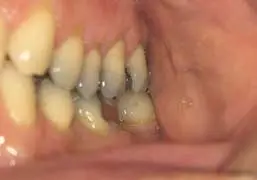
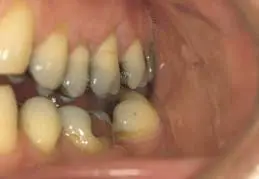
Where should the occlusal contact be placed?
The paper stresses that occlusal forces should, as far as possible, be directed along the long axis of the tooth. Contacts on the inclined planes of cusps (incline contacts) can generate lateral forces which, in the authors’ view, may in some circumstances be associated with unwanted tooth movement, fracture or mandibular deflection.
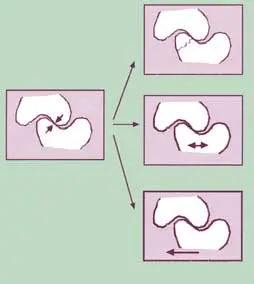
So if we can move a contact from an incline to a more suitable area such as a fossa or a marginal ridge, we may have improved the occlusion of that tooth.
But there is an important boundary: as long as the contacts of the other teeth and the patient’s jaw relationship have not changed, we are still within the Conformative approach. Improving the occlusion of one crown is no excuse to start adjusting the contacts of other teeth without a plan.
A simple sequence for everyday work
For managing occlusion in direct and indirect restorations, the authors propose a four-step sequence called EDEC:
Examine → Design → Execute → Check
That is, first we examine, then we design, then we carry out the restoration, and finally we check the result.
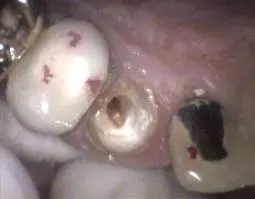
Before picking up the handpiece, we record the patient’s static contacts in their habitual closing position (CO) with articulating paper or thin foil. Then, with a different colour, we examine the dynamic contacts in lateral and protrusive movements.
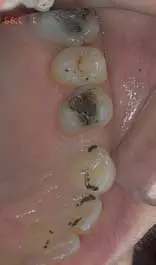
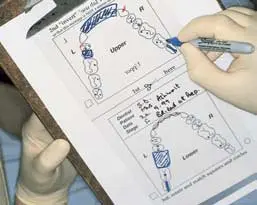
This information can be recorded with a photograph, a simple sketch or a short note. What matters is that, before changing the occlusal surface of the tooth, we know which contacts existed and which should be preserved.
This matters even in an ordinary composite restoration. When we know where the previous contact was, cavity design and shaping of the restoration surface become more purposeful.
Another point is that a short restoration is not necessarily a good restoration. Sometimes, to avoid a high restoration, we adjust it so that it effectively comes out of occlusion. Escaping a high contact is no reason to remove the restored tooth’s natural participation in the occlusion.
At the final check, too, we should not look only for a high contact on the restoration. A new contact may have eliminated a previous contact on an adjacent tooth or changed the guidance pattern.
With crowns, occlusion is not the laboratory’s responsibility alone
The authors regard the technician as a second operator, not merely someone who carries out the dentist’s instructions. But to design the occlusion correctly, the technician needs to know what contacts the patient’s teeth had before preparation.
An impression or scan alone does not convey all of this information. A photograph of the occlusal contacts, a simple sketch or a description of the patient’s guidance can help.
The paper also makes an interesting point about bite registration: no bite registration material on its own guarantees that the occlusion is transferred correctly.
For example, if the registration material extends onto mucosal surfaces, it may prevent the two models from seating correctly on the stone casts and make their relationship differ from the actual situation in the mouth.
The authors suggest that, where possible, the registration material should be placed only between the prepared tooth and the opposing teeth, with the contacts of the other teeth preserved.
The relationship of the models is also best checked against a second, independent record, even a two-dimensional sketch of the contacts.
If the discrepancy is small, it is sometimes possible to restore the patient’s actual contacts by limited adjustment of the stone model (Model Grooming). But with larger discrepancies, repeating the registration or making new models is more sensible.
Checking the accuracy of the models’ occlusion is always necessary, even if we make no adjustment to them.
Establish adequate space for the restoration from the start
If, because of preparation limits, there is not enough space for an adequate thickness of restorative material, it is better to identify this before the crown is made.
Sometimes the prepared tooth surface needs further reduction or, in selected cases, the opposing tooth needs slight adjustment. This decision should be agreed with the technician in advance and explained to the patient, rather than being confronted with a high crown at the fit appointment.
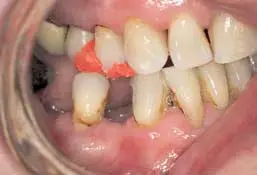
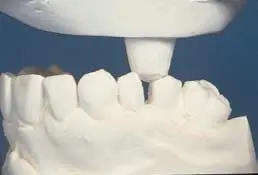
The paper also introduces the Functionally Generated Pathway (FGP) technique, in which the path of movement of the opposing teeth is recorded with a suitable material. This way the technician has, in addition to the static contacts, information about the patient’s actual movement paths.
Do not underestimate the provisional crown
A provisional crown is not just for covering the prepared tooth. Between preparation and fit, it is meant to maintain the tooth’s relationship with the adjacent and opposing teeth.
It must therefore have adequate seating and stability and also establish the occlusal contacts correctly. If the provisional does not maintain these relationships, the patient’s occlusion may have changed by the fit appointment.
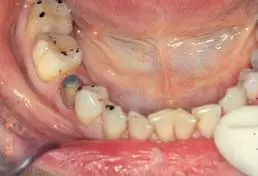
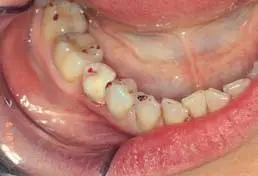
For this reason, the authors recommend making a custom, accurate provisional crown.
Final check: before and after cementation
The occlusion of a crown should be checked both before and after cementation.
It is not enough that the crown is not high; we must make sure the other teeth still have their previous contacts. Lateral and protrusive movements also matter. The authors consider interfering contacts during these movements undesirable, especially in posterior restorations.
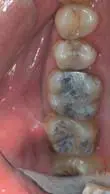
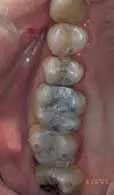
So our criterion is not just the mark on the crown; we must compare the final occlusion with the situation recorded before treatment.
Finally, the paper reminds us that occlusion cannot be judged by a few mechanical rules alone. The state of the periodontium, the muscles, the temporomandibular joint and the patient’s adaptive capacity also matter. Even a contact that is theoretically unfavourable does not necessarily cause problems in every patient. The frequency and intensity of force application, especially in parafunction, also matter.
My conclusion is that in routine restorations we are not meant to rebuild the patient’s occlusion from scratch. We must first understand it, preserve it as far as possible, and if we do change something, know exactly what we are changing and why.
Good occlusion in a simple restoration is not something achieved only at the end with articulating paper; it takes shape before preparation begins.