
Chairside 02
Excessive Space in the Premolar Region — A Prosthetic Decision Within an Orthodontic Limitation
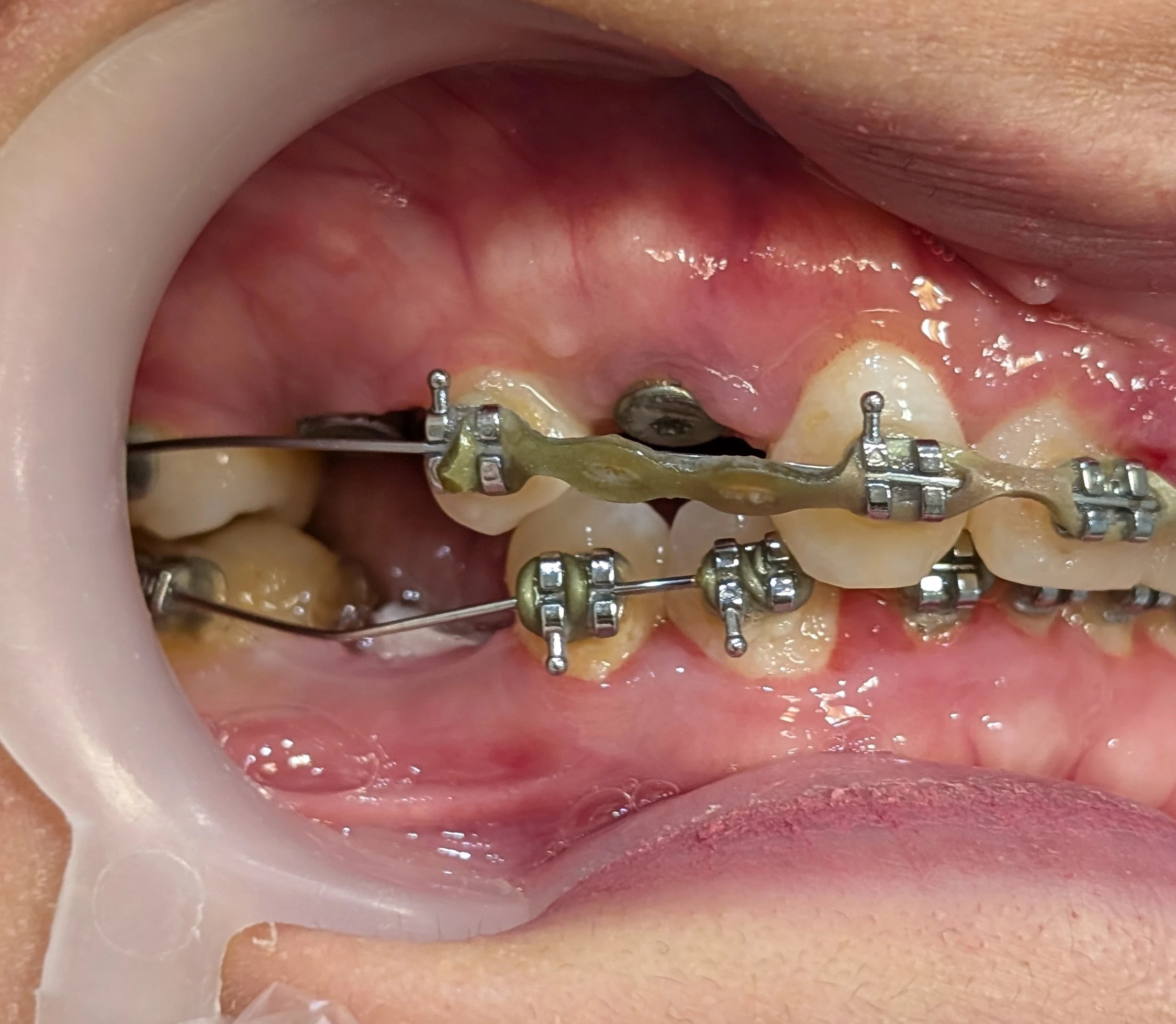
Today a patient was referred by the orthodontist for space assessment. The question was simple: «Are the spaces adequate or not?»
In borderline cases, my path is clear: a scan, a digital design, fabrication of a provisional crown with the correct anatomic size; then assessing whether the space is too little or too much, and completing the orthodontic treatment on that basis.
But this case was not borderline.
Behind the canine, there was a space that was clearly too large for a premolar; so large that if we wanted to respect the anatomic standard, we would in effect arrive at building a molar in the premolar position.
And this is where the issue is not only millimeters. The appearance of a molar immediately behind the canine is not pleasing for most patients. Visually, it is heavy.
For this reason, not even a provisional was made. The space was rejected at this very stage, and a letter was sent to the orthodontist.
The answer was that changing the space is not possible; further movement would disrupt the overall order of the treatment.
So the decision was made to begin the work — while noting that if any flaw is seen in the final smile, its origin is not the prosthetic diagnosis but rather the orthodontic limitation.
An idea that may be implemented later: placing a single implant and designing two premolars on one implant, so that the patient sees the appearance of two teeth, not one wide, heavy molar.
Chairside, decisions are sometimes more visual than they are millimetric.
The content of this page is intended for the educational use of dentists and dental students.