
Chairside 24
Staged Treatment Planning for a Complex Implant Case: When Missing Prosthetic Vision at Initial Surgery Complicates the Final Prosthesis
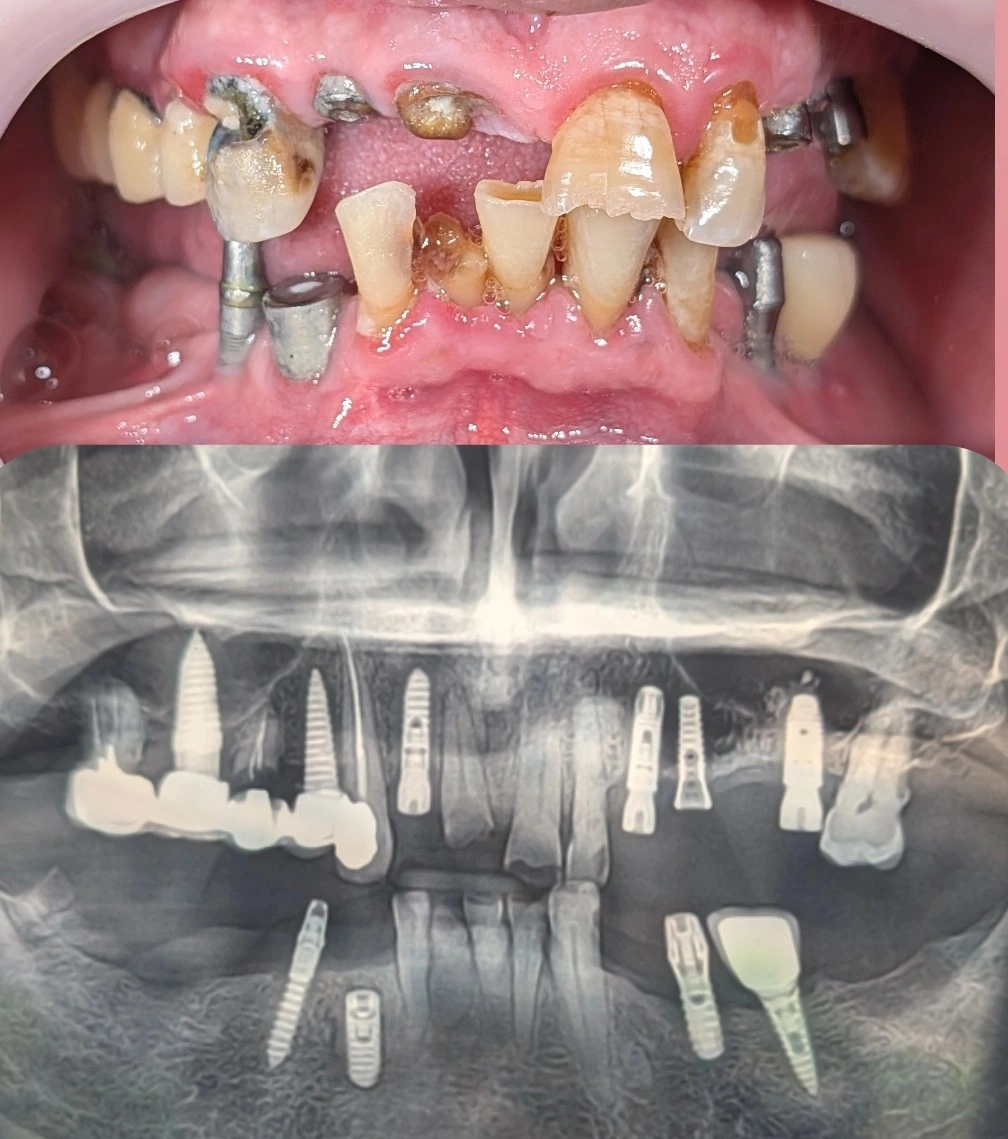
Initial Status and Challenges. The patient presented to the clinic for prosthetic treatment with a history of extensive implant surgery performed by an experienced surgeon. Some of the existing implants were very old — more than 20 years old. The patient was eager and insistent on starting the final prosthetic treatment immediately; however, because of the need to complete biological healing phases along with additional corrective surgeries, a minimum wait of 6 months before starting the final prosthetic phase was set. Also, to keep the treatment plan economical and manage costs, we decided not to touch the upper right bridge for now.
Diagnostic Perspective and Principles of the Corrective Treatment Plan. Facing this complex case, the treatment strategy was built on three fundamental principles:
- Priority on peri-implant health and occlusal stability. Our first goal is to establish a healthy biological environment and achieve a stable occlusion; the definitive treatment will not begin until this foundation is solid.
- Decisiveness in removing failed implants. When facing old or defective implants that cannot be maintained (problematic implants), we make no compromises — explantation (removing them) is the first line of treatment.
- Intelligent staging. The treatment plan was fully staged so the patient would experience the least possible esthetic and functional harm.
Treatment Plan and Execution Staging:
- Upper jaw (esthetic management and foundational treatment). The status of the upper right central incisor was determined and it became a candidate for implant replacement. The upper right canine needs a new post-and-core foundation and crown; but so the patient spends the least possible time without the canine tooth, and their current appearance and esthetics aren't disrupted, we are not starting treatment on this tooth for now — it has been deferred to later phases, to be addressed once the surgical phase is complete.
- Lower left jaw (priority occlusal rebuilding). Explantation of implant #5 (which was non-functional) and placement of two new implants in the #4 and #5 region, to establish occlusion on this side in the first operative phase.
- Lower right jaw. A specialist periodontal consultation, and entry of the patient into the first surgical phase to prepare a healthy environment.
️Conclusion and Clinical Tip: this case is a clear example of the challenges that arise from a lack of "prosthetic vision" in initial surgeries. If the oral and maxillofacial surgeon had considered the final prosthetic treatment plan, along with the patient's future smile and occlusion, at the time of the surgery, the patient's situation would not have become this complex.
The content of this page is intended for the educational use of dentists and dental students.