
Chairside 37
The Price of Incomplete Seating: From a Wrong Occlusal Adjustment to a Hopeless Tooth
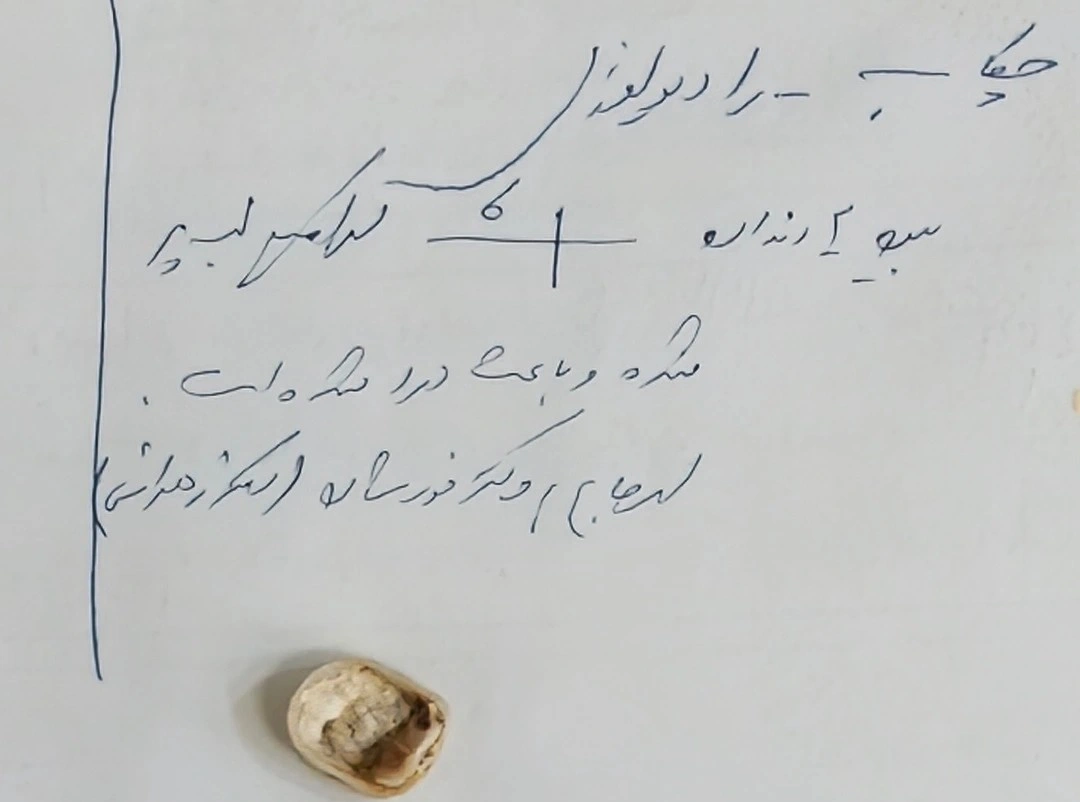
The patient came in holding the crown, under the impression that we had made the crown on tooth 6 for them. The chart showed that our work had been the implant at tooth 5. The first guess, from examining the crown that came off and nothing else, was a seating error at delivery — and after the radiograph and the examination it was confirmed that the abutment tooth had become hopeless because of extensive caries.
The visit.
The patient came in complaining that a crown had come off. They believed we had placed that crown for them earlier. The chart showed that what we had done was the implant at tooth 5, and that the crown which came off belonged to tooth 6, made by another colleague (in the patient's own city, a long way from our office).
I had recorded in the chart that a few years earlier, at a previous visit, I had seen a chipped crown on 6 and pain in the proximal area (caused by food impaction), and had told the patient it needed to be replaced. Since the patient had travelled a long way, I told them that now that they were here, they should get a radiograph so I could assess the situation, and if they wished, we could start the retreatment.
Clinical assessment and decision.
- Clinical Facts:
Examining the crown that came off showed the pattern of the cement inside the crown. The occlusal surface of the crown had also been ground down severely. In the history, when I asked the patient why they had not replaced the crown after I told them it was broken, they said: "My dentist ground some teeth and the problem was solved." - Interpretation:
Before seeing the radiograph, and purely from the pattern of the cement inside the crown and its heavily ground occlusal surface, I suspected the crown had not seated properly from the palatal side at the delivery appointment (incomplete seating). That failure to seat left the crown high, and the previous dentist adjusted the occlusal surface heavily to establish occlusion.As for the patient's claim that the problem had been "solved" in the past, my reasoning is that the patient simply took the disappearance of the pain as the problem being solved. The previous colleague most likely ground the plunger cusp, which relieved the patient's pain, but the food impaction remained — and that is exactly what drove the speed of caries formation so high.
Clinical confirmation and treatment plan.
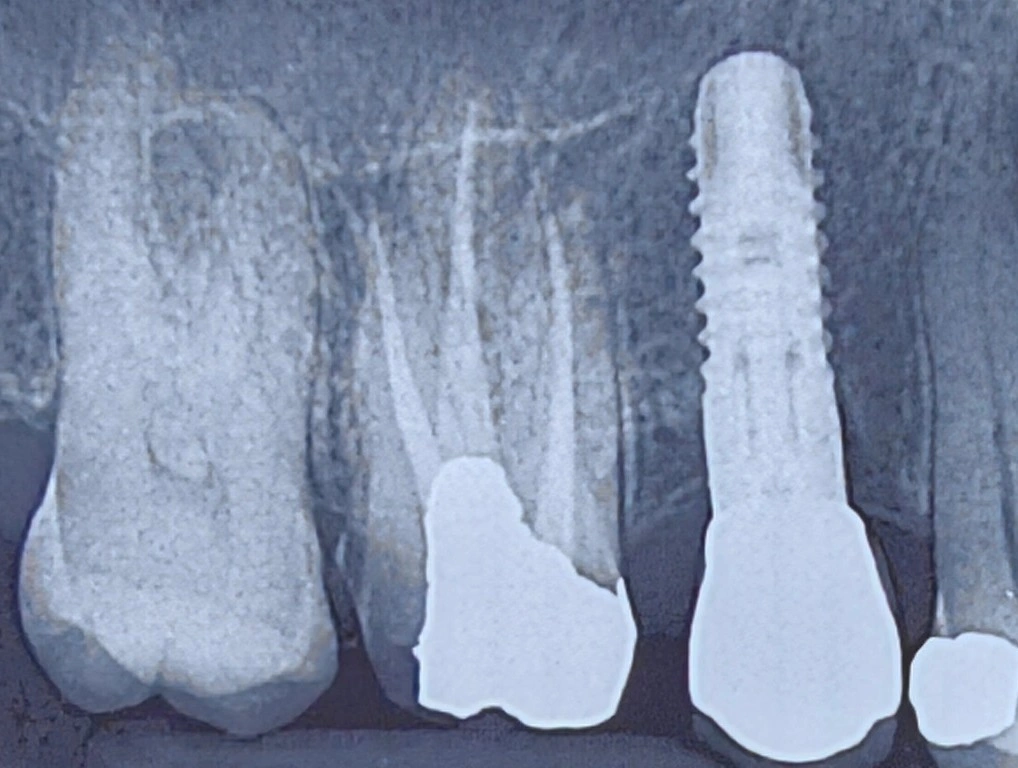
I waited for the radiograph. When the patient brought it in and the clinical examination was done as well, my hypothesis was fully confirmed: the failure of the crown to seat had produced very deep caries on the proximal surfaces of tooth 6.
Because of the extent of the tissue destruction, I judged tooth 6 unrestorable (hopeless), and the path to retreatment for this tooth is closed. The treatment plan is extraction and replacement with an implant.
️Clinical Tip: At the delivery appointment for a restoration, if you meet an unreasonable high spot in the occlusion, then before you reach for the handpiece and grind the occlusal surface of the crown, always check that the margins are fully seated — especially in the areas out of sight, such as the palatal and the distal. Adjusting the occlusion of a crown that has not seated only erases the symptom; it costs the patient silent caries and, eventually, the abutment tooth.
The content of this page is intended for the educational use of dentists and dental students.