
Chairside 42
From Which Side Should We Close the Excess Space Next to an Implant?
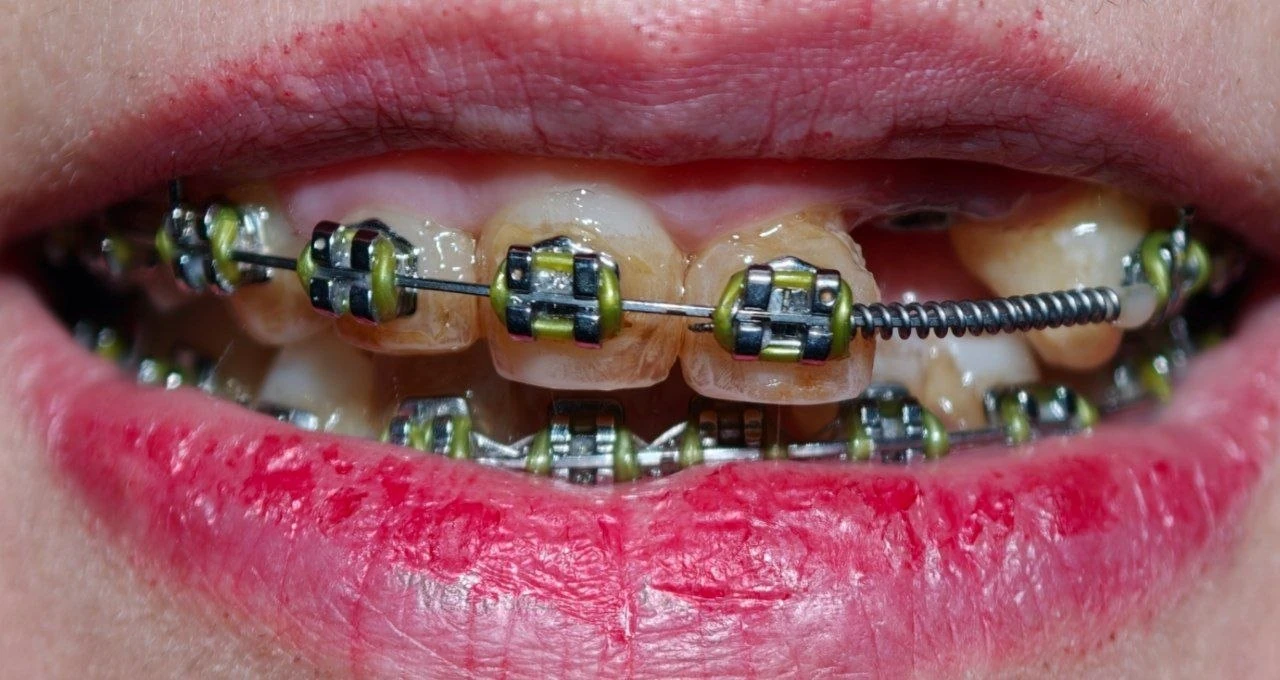
In this case, deciding when to fabricate the implant crown depended on coordinating the prosthetic plan with further orthodontic treatment. Before fabricating the crown, the desired tooth positions and distribution of anterior space needed to be established.
Today, a patient came in for a consultation with an implant in the maxillary left lateral incisor region. The question was whether orthodontic treatment had reached the point where we could fabricate the implant crown, or whether further tooth movement was still needed.
At first glance, the space between the left central incisor and canine was too wide for a lateral incisor crown. But the main issue was not simply the excess space; we had to determine from which side it should be closed.
Should the central incisors and adjacent teeth move to the left, or should the left canine and the posterior teeth behind it move to the right? The answer would determine the dimensions and position of the implant crown.
To make that decision, I first assessed the patient's midline. One of our references for evaluating the dental midline is the philtrum of the upper lip. In this patient, the dental midline was shifted to the left relative to the philtrum. We therefore should not worsen that deviation by moving the central incisors farther to the left.
With this in mind, my proposed plan was to design the implant crown with dimensions similar to the contralateral lateral incisor and establish its mesial contact with the left central incisor. This would leave the excess space distal to the crown and clarify how far the left canine and the posterior teeth behind it needed to move to the right.
Of course, this design would be possible only if the implant position allowed a crown with an appropriate form and emergence profile. The aim was not simply to fill all the available space by making the crown wider. We could first define the proposed crown position and dimensions in a digital design to provide a basis for coordination with the orthodontist, then fabricate the definitive crown after the tooth positions had been corrected.
But the patient had another request: slightly wider central incisors.
In the current situation, there was not enough space to increase the width of the central incisors. Nor could we create that space by moving them to the left, because the midline was already shifted in that direction.
The approach that occurred to me was to create a controlled diastema between the two central incisors. If the right central incisor and the teeth distal to it moved to the right, we could create new space between the central incisors. Later, by distributing that space between the two central incisors and increasing their widths, we could bring their dimensions closer to the patient's wishes while also correcting the midline.
In other words, we needed to consider the anterior teeth together, rather than focusing only on the space available for the implant crown. One part of the problem was closing the excess space in the implant region; the other was correcting the midline and the proportions of the central incisors.
At the end, the patient asked, “Can the orthodontist carry out these movements?”
I explained that this was the treatment plan I would propose if we wanted to achieve an ideal esthetic result. However, whether these movements were orthodontically feasible would have to be assessed by the orthodontist.
If they were feasible, we could proceed on the basis of the desired tooth positions. If the orthodontist determined that some of the movements could not be carried out, we would at least know the treatment limitations and could design the best possible result within that framework.
For me, the point of this case was that having enough space to fabricate an implant crown does not necessarily mean the patient is ready for prosthetic treatment. Sometimes, before deciding the dimensions of a crown, we need to determine how the available space will be distributed among the teeth, particularly when the implant occupies a fixed position and only the natural teeth can be moved.
This page is intended for educational use by dentists and dental students.