
Insight 52 — When Tactile Feedback Ruled Out a Lab Error
Published:
Last reviewed:
فارسی
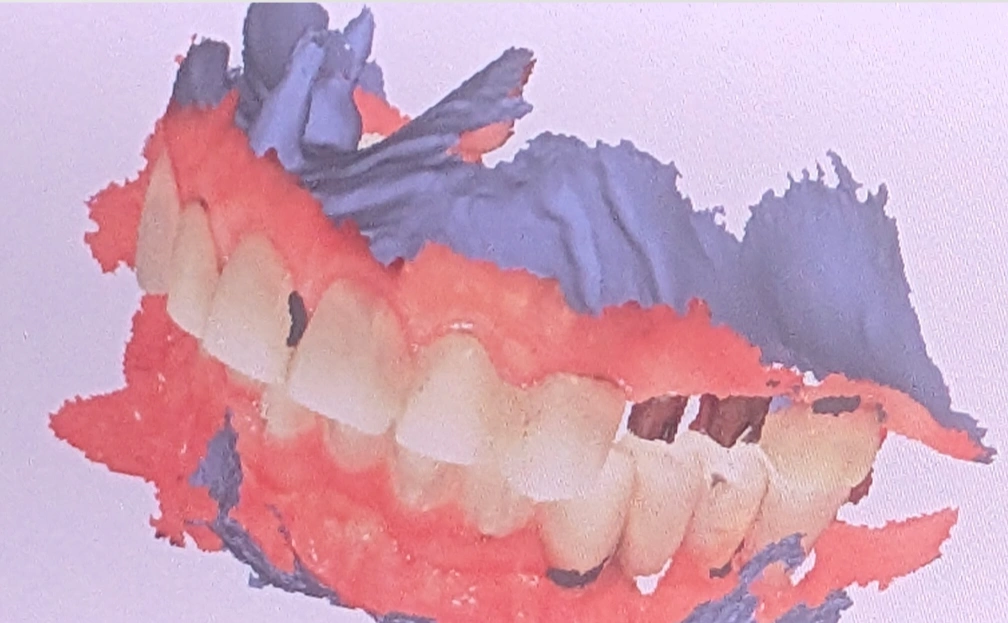
Clinical Explanation
Implant crowns looked tall at delivery and a lab error in forming the abutment was suspected at first; but an unusual, early feel while unscrewing the abutment revealed it had not fully seated on the hex, and this single incomplete seating had disguised itself as several independent, apparently lab-related errors. Tactile feedback is an early warning, but definitive confirmation of seating is made with a correctly angled periapical radiograph
-
Case description
The patient presented for delivery of implant crowns. At the previous appointment the crowns had been remade because they lacked buccolingual stability on the abutments. This time the abutments were tightened, the crowns were tried in, stability was complete, and there was no mobility. It seemed the stability problem had been solved at the lab. -
Observation
The crowns sat far too high in position. After attempting to adjust the occlusion, the height was still excessive. The marginal ridges were higher than the adjacent teeth. Removing the crowns revealed that one of the abutments had been formed so tall that only about 0.2 mm of space remained for the zirconia.
The initial impression was that the error lay in the design or forming of the abutment by the lab, and that at the previous appointment the other problems had probably been so numerous that this one had gone unnoticed; it was decided to request the design file to investigate the marginal ridge discrepancy. -
The decisive detail
While unscrewing the abutments, the feel of loosening was not as usual. The abutment separated from the fixture earlier than expected. This unusual feel raised the suspicion that the hex was not fully engaged. After repositioning and tightening the screw, the abutment seated completely, the space needed for the zirconia was provided, the crown fell into its correct position, and the occlusion was corrected. -
Conclusion
The main problem was not a lab error. The abutment had not fully seated on the hex and was slightly malpositioned, and this was what made it appear taller. This extra height made both the crown and the abutment look tall. Even the marginal ridge discrepancy with the adjacent tooth could have been a consequence of this same occlusal displacement, not necessarily a design error. In other words, a minor error in seating had presented itself as several independent errors seemingly related to the lab. -
Clinical lesson
The tactile feedback while tightening and unscrewing an abutment or scan body, and the number of screw turns until complete seating, is an early sign of whether a component is seating correctly or not. Early separation or unusual resistance should raise suspicion of incomplete hex seating. Nevertheless, this feel is a warning, not a final confirmation. Definitive confirmation that the abutment is fully seated on the fixture platform is made with radiography (a correctly angled periapical) that shows the absence of a gap at the connection. Beyond changing the height, incomplete seating also carries the risk of a microgap, screw loosening, and abnormal loading on the assembly.
The content of this page is intended for the educational use of dentists and dental students.